Two Weeks, One Loop: The Complete Cyclades Catamaran Circuit for 2027
The complete two-week Cyclades catamaran loop from Athens, with layover days built in to absorb the meltemi.
Read more
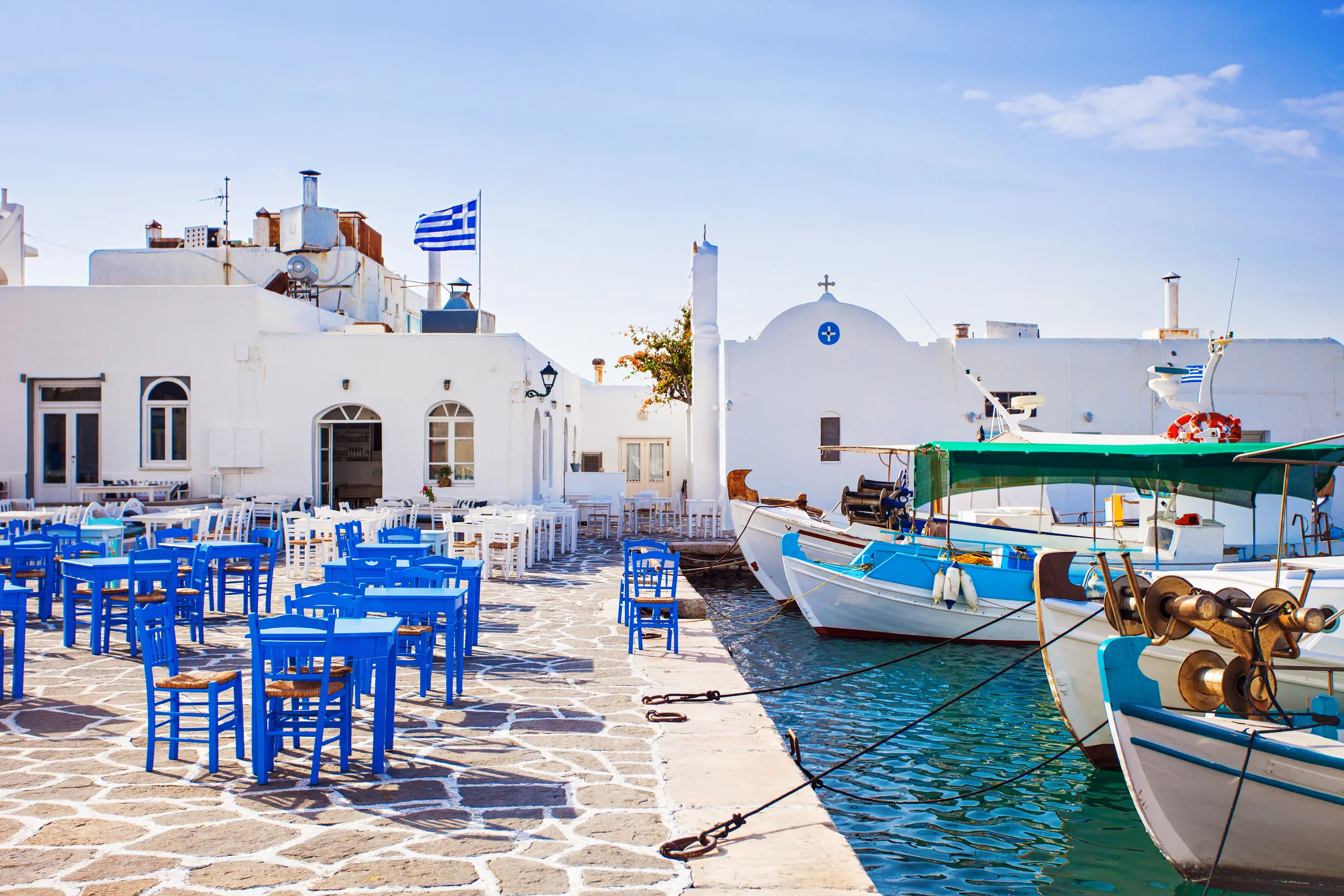
Yes, you can tie up for free at a Greek taverna quay and pay nothing for the berth, as long as the crew eats dinner ashore that night. Good greek taverna dock etiquette is the difference between a warm welcome and a frosty one, and it works at dozens of small island harbours from the Cyclades to the Dodecanese. The catch is that the deal runs on unwritten rules, and getting them wrong is the fastest way to sour an otherwise lovely evening.
This is the practical version: who to phone before you arrive, how the lazy line works, whether you actually get water and power, what you owe the owner, and where a wide catamaran beam changes the maths. None of it is complicated once you have done it a couple of times.
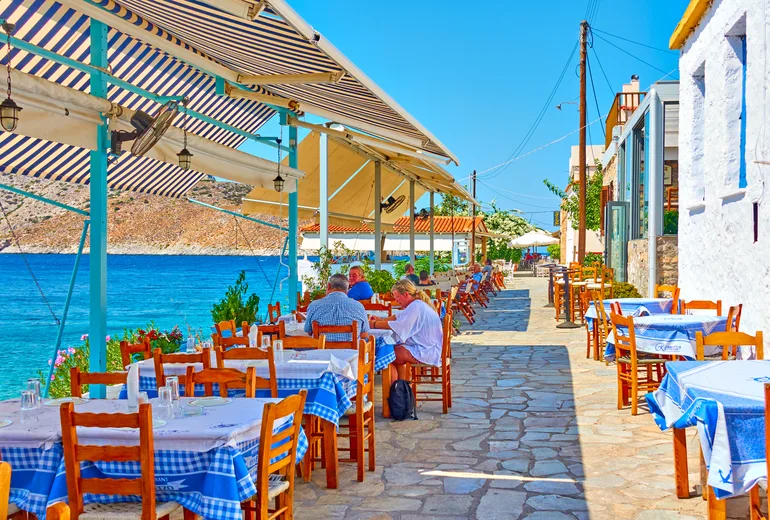
The principle is simple. A family-run taverna owns or controls a stretch of the village quay. They let visiting boats moor there at no charge, and in return they expect the crew to have dinner at their tables. No menu minimum, no signed agreement, just an understanding that goes back generations. Spend a normal amount on a meal for your crew and everyone is happy.
What trips people up is treating it like a free marina. It is not. The berth is effectively your table deposit. A crew of six that ties up, swims all afternoon, then wanders off to the taverna next door has broken the deal, and word travels fast in a small harbour. On a typical evening you will pay roughly €18–30 a head for a generous spread of grilled fish, salads, a carafe of local wine and the usual run of mezedes, which is hardly a hardship.
In July and August the good taverna quays fill by late afternoon. A quick phone call around lunchtime, often to a number painted right on the seawall or listed on the taverna’s social page, lets the owner hold a spot for a boat your size. Mention your length and beam. Greek owners juggle their quay like a puzzle, and a 7.5 m wide cat is a different problem from a slim monohull.
Most Greek quays are stern-to or bow-to with no finger pontoons, so you either drop your own anchor off the bow and back down, or you pick up a lazy line the taverna has laid. A lazy line is a heavy ground chain running out from the quay with a lighter pick-up line you haul aboard and make fast forward. It saves you fouling a neighbour’s anchor in a crowded harbour, which happens more than anyone admits. The bigger ports run differently from these village seawalls; our Greek marina guide to Alimos, Lavrion and Mandraki covers the serviced berths where you pay a fee but get proper lazy lines, water and power.
If you are anchoring instead, lay plenty of scope and watch your swing. Many crews find the afternoon katabatic gusts off the hills push the bows around just as the tavernas start serving. Set the hook properly the first time. Re-laying an anchor at 21:00 in front of a full taverna terrace is a special kind of theatre nobody enjoys.
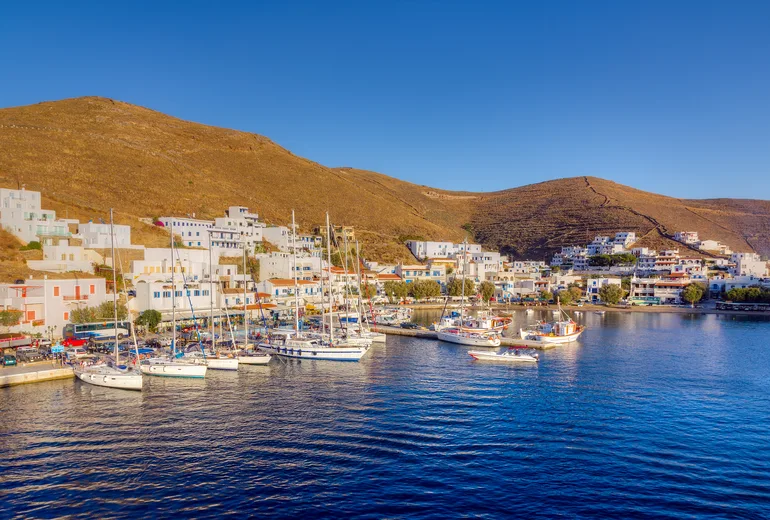
Do not assume shore power. Some taverna quays in places like Kioni on Ithaca or the smaller Cycladic harbours have a water tap and a couple of power posts; many have neither. Where water is available it is often metered or simply offered as a courtesy if you ask politely, and a fair tip for a full tank is a few euros or a round of after-dinner drinks. Treat power as a bonus rather than a plan, and charge your devices and run the fridge hard while you are motoring in.
You owe them dinner and basic courtesy. You do not owe a separate mooring fee, and you should be wary of anyone on the quay demanding cash to take your lines who has no connection to the taverna. In a handful of busier harbours, freelance line-handlers will grab your stern line and then expect a tip; a friendly nod and your own crew handling the lines usually settles it.
Tipping for the meal follows normal Greek custom, which is modest. Rounding up the bill or leaving five to ten percent for good service is plenty. If the owner held your spot, helped with lines and filled your water tank, a little extra warmth goes a long way and tends to be remembered next season. The whole system rests on goodwill, the same goodwill that keeps a charter budget sane when you understand where the real costs of a Greek catamaran charter actually hide.
Occasionally plans change. The wind pipes up, a guest feels unwell, or you simply have to push on. The honest move is to find the owner, explain, and offer to pay something for the berth or buy a round of drinks and a few takeaway mezedes. Most owners are gracious about a genuine reason. Slipping your lines at dawn having used the quay all night and eaten nowhere is the one move that gets a boat, and sometimes a charter company, a quiet bad name in the village.
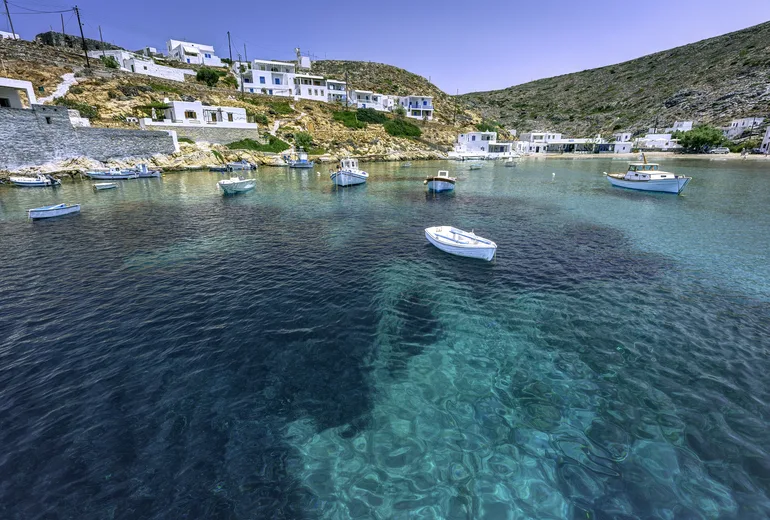
Here is where catamaran crews need to think differently. A modern 45 ft cat carries a beam of around 7.3–7.6 m, which is the footprint of two and a half monohulls along the quay. On a short village seawall that holds maybe six boats stern-to, a single cat can swallow the space of two or three, and that is exactly why calling ahead matters so much.
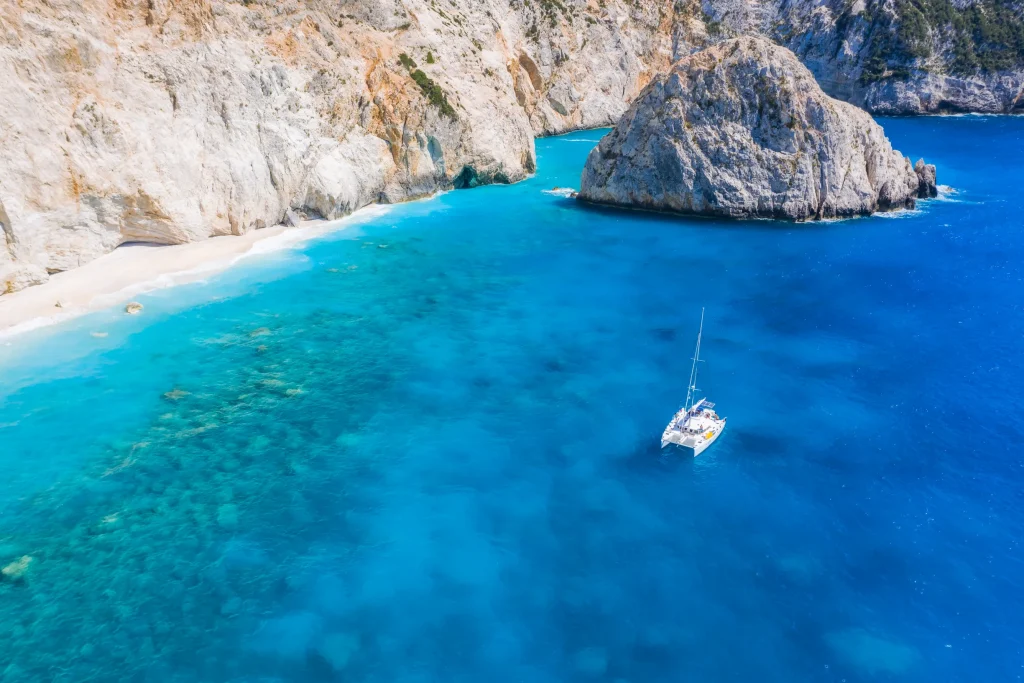
Some tiny harbours simply cannot take a wide cat alongside, and the owner will tell you so on the phone, saving you an awkward turn in a packed basin. The workaround most crews use is to anchor off in the bay, then run the dinghy in for dinner. You still honour the deal, the owner still gets your table, and you sleep at anchor with more swinging room. Bring a decent dinghy and a head torch for the row back, because village quays go dark early.
Slow down on the approach and look at how boats are already lying. If the existing line is tight bow-to with anchors crossed everywhere, a big cat dropping in stern-to will struggle. Where the quay is bulkhead-straight and reasonably deep right up to the wall, a cat can often go alongside, which is far easier than backing into a gap. When in doubt, a wide boat alongside the very end of the quay, where it juts past the line, keeps everyone’s anchors clear.
Eating out most nights is part of the joy, but smart crews still provision properly for breakfasts, long passage lunches and the night the only taverna is shut. Stock up in the bigger ports before you head for the small ones, because a remote island shop carries less and charges more. Our full catamaran provisioning guide for Greece breaks down what to buy where and roughly what a week aboard costs to feed.
Think of the taverna quay as the social heart of the trip rather than a money-saving hack. The free berth is real, but the point is the long table, the carafe that keeps appearing, and the owner who remembers your boat. That is the part guests talk about for years.
In most small island harbours, yes. The taverna offers the quay at no charge in exchange for your crew having dinner at their tables that evening. There is no formal contract, just a long-standing understanding, so spend a fair amount on the meal and treat the berth as part of the deal rather than a free marina.
Some do, many do not. A few have a water tap and one or two power posts, often offered as a courtesy if you ask; plenty of village seawalls have nothing at all. Charge your batteries while motoring and top up water in the larger ports so you are never relying on a small harbour having shore services.
Sometimes, but a 45 ft cat takes the space of two or three monohulls, so always phone ahead with your length and beam. If the quay cannot take you alongside, anchor off in the bay and run the dinghy in for dinner. You still honour the arrangement and you sleep with more room to swing.
Find the owner, explain, and offer to pay something for the berth or buy a round and a few mezedes to go. Genuine reasons are usually met with grace. The one thing to avoid is using the quay overnight and slipping away at dawn having eaten nothing, which earns a quiet bad reputation in the village.
Greek tipping is modest. Rounding up the bill or leaving roughly five to ten percent for good service is normal. If the owner held your spot, took your lines and filled your water tank, a little extra goes a long way and tends to be remembered when you sail back next year.
Ready to build a route around the best taverna harbours? Browse our Greek catamaran charter destinations and start matching anchorages to dinner tables.