The 2027 Greek Catamaran Early-Bird Timeline: When Discounts End & Boats Sell Out
How the 2027 early-bird windows tier down month by month, which catamarans sell out first, and the trade-offs of committing early.
Read more
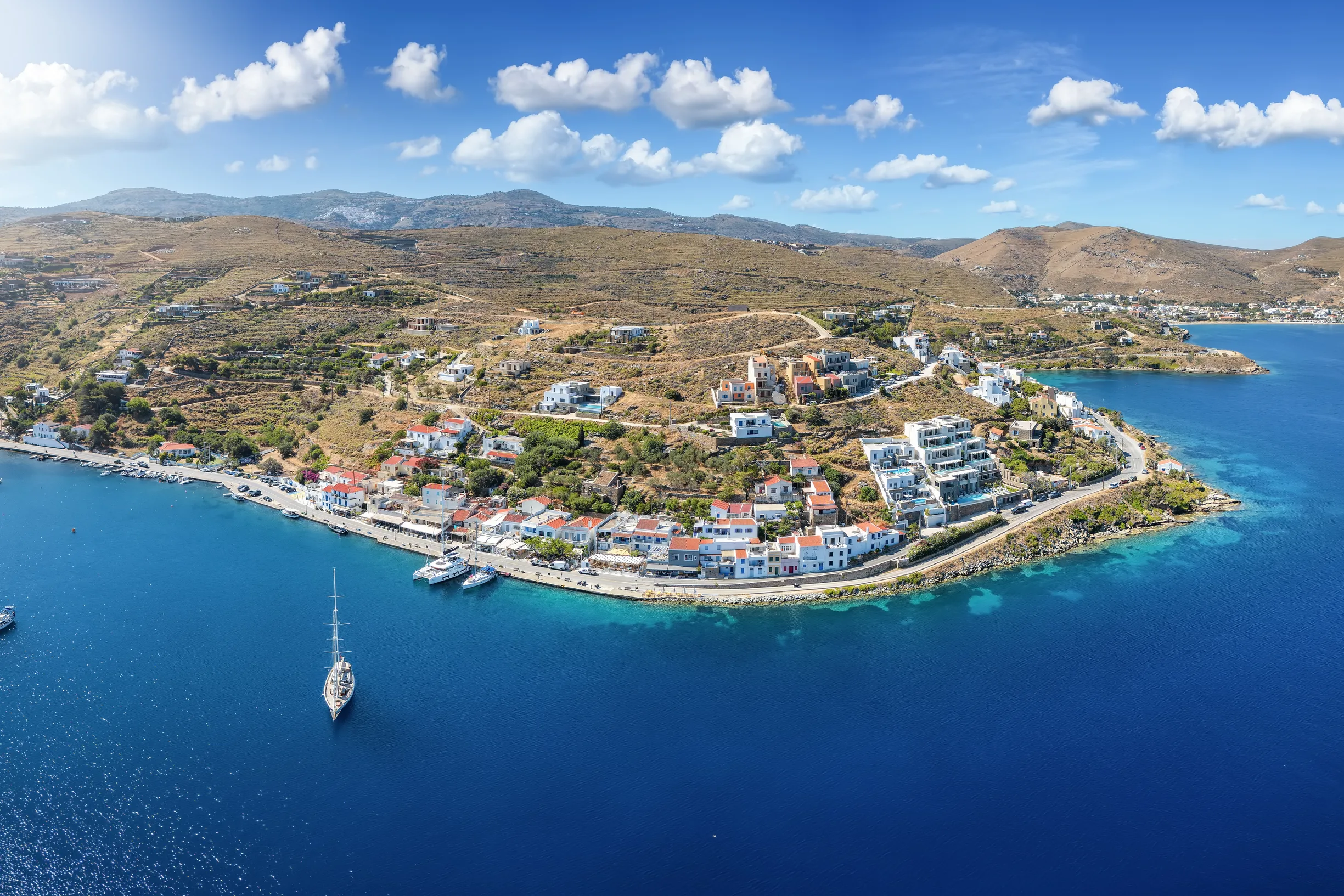
Two weeks is the difference between sampling the Cyclades and actually sailing them. With a fortnight you stop counting miles and start choosing weather windows, which is exactly how a good 2 week sailing itinerary greece should feel. Fourteen nights gives you room to wait out a hard meltemi, double up on the islands you love, and still close a full loop back to your base.
This is the circuit we send experienced groups on when they want the whole Cyclades, not a highlight reel. It runs anti-clockwise from Athens: down the western line through Serifos, Sifnos and Milos, a southern hook past Folegandros with a Santorini sail-by, then east into Amorgos and the Small Cyclades before riding home through Naxos and Paros. Layover days are built in on purpose.
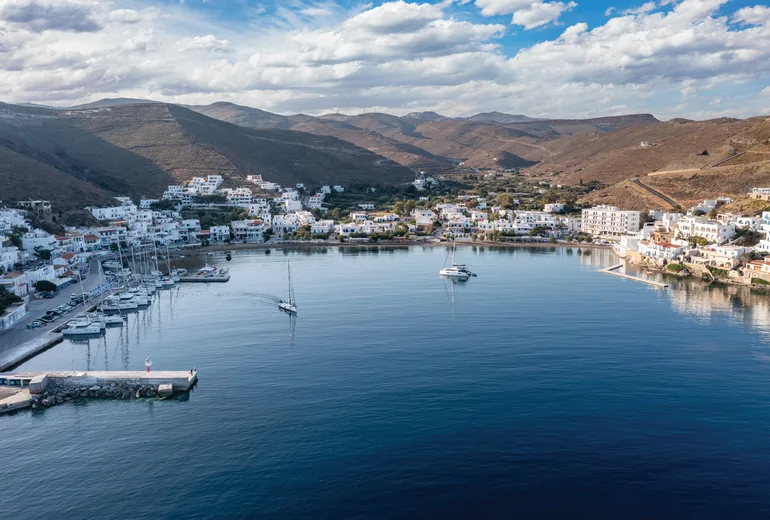
Fourteen nights breaks naturally into two arcs. The first week pushes south and west on the sheltered side of the wind; the second week works back north and east, where the meltemi has more say. We’ve spaced the longer legs early, while crews are fresh and the forecast is easier to read four days out.
Plan on roughly 220–260 nautical miles over the fortnight, which is a relaxed pace for a 45–50 ft cruising cat. Most days are 18–30 NM, three to five hours under sail. Two of the fourteen nights are deliberately blank: keep them in your pocket for when the wind hits 30 knots and the smart move is a second night in a good harbour with a cold beer.
A four-cabin catamaran in the 45–50 ft range runs roughly €9,000–18,000 a week in high season, before the running costs. Over two weeks, fuel, marina fees, water and the end clean usually land somewhere around €1,200–1,800 on top, depending on how many nights you take a quay versus dropping the hook for free. For groups of six to eight, that maths gets friendly fast — we break it down properly in our detailed week-on-a-catamaran budget breakdown.
One practical note on provisioning for a fortnight: don’t try to buy everything in Athens. The big shop at the start covers the staples — water, wine, breakfast, snacks, cleaning bits — but fresh produce, bread and fish are better and cheaper bought island by island. Naxos and Paros have the best mid-trip supermarkets, so plan a top-up around day eight or nine. A 50 ft cat’s fridges and freezer will hold a week of perishables comfortably; beyond that you’re restocking anyway.
The meltemi rarely blows flat-out for two solid weeks. It comes in pulses — three or four days of fresh northerlies, then a lull. The trick over a fortnight is to do your committed open-water legs in the lulls and use the windy spells to enjoy a sheltered island you’d planned to linger on anyway. Check the forecast each evening for the next 48 hours; in the Cyclades, anything beyond four days out is a guess. If a real blow is coming, the smartest move is almost always to sit tight in a good harbour rather than push a marginal crossing.
Two weeks ties up a lot of holiday, so picking the right fortnight matters. The shoulder months are the smart play. Late May into mid-June gives you warm water, gentler winds and islands that are open but not overrun — and charter rates noticeably below August. The first three weeks of September are arguably even better: the sea is at its warmest after a summer of sun, the meltemi typically softens, and the crowds thin out fast after the 20th.
July and August deliver reliable sun and long days, but the meltemi is at its strongest and the popular anchorages fill early. If those are your only dates, the layover days in this plan become essential rather than optional. Whenever you go, book a two-week peak slot well ahead — boats that allow a fortnight in high season are snapped up months out, as our timeline guide explains.
Leave Lavrion or Alimos and point south. The western Cyclades sit in the meltemi’s lee for the first couple of legs, so you usually get a gentler shakedown than the open Aegean crossing further east.
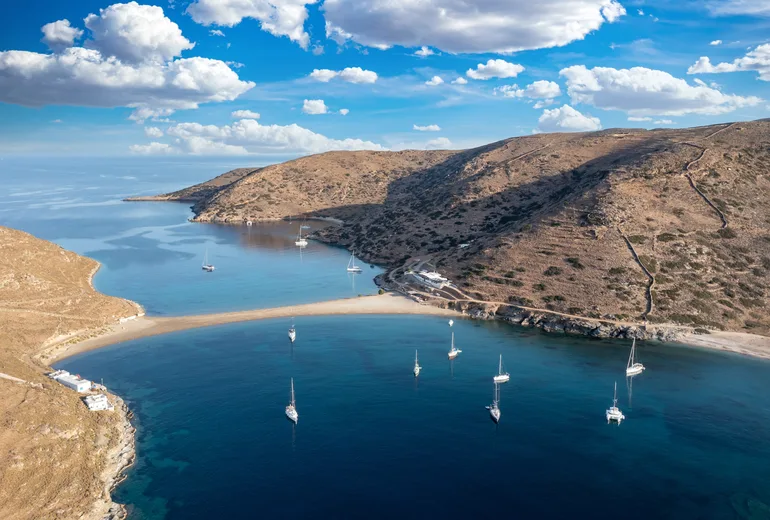
First hop is Kythnos, around 25 NM from Lavrion. Aim for Kolona, the double-sided sandbar that lets you anchor on whichever side the wind isn’t. It’s one of the few anchorages where you can swim across from your stern to a beach in ankle-deep water. Next morning, push on to Serifos — about 22 NM — and take a berth or anchor below Livadi. The hilltop Chora is a steep climb or a quick taxi; do it at golden hour when the windmills catch the last light and the tavernas in the upper square fill with locals, not tour groups.
Sifnos is barely 12 NM on, about three hours. This is where you eat well. The island more or less invented the Greek clay-pot tradition — order revithada (baked chickpeas) on a Sunday and mastelo, lamb slow-cooked in wine and dill, anywhere. Anchor or moor at Kamares, then take a day to wander Apollonia and Kastro. Build a layover here if the forecast looks angry; there are worse places to be stuck than a Sifnos bakery.
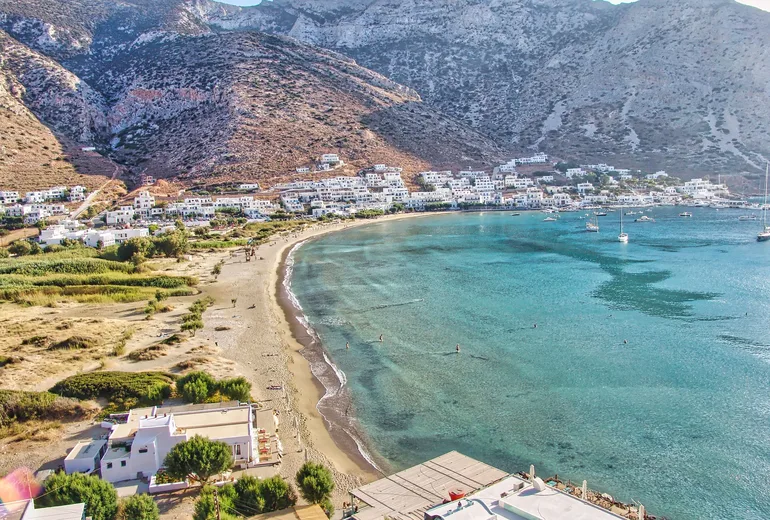
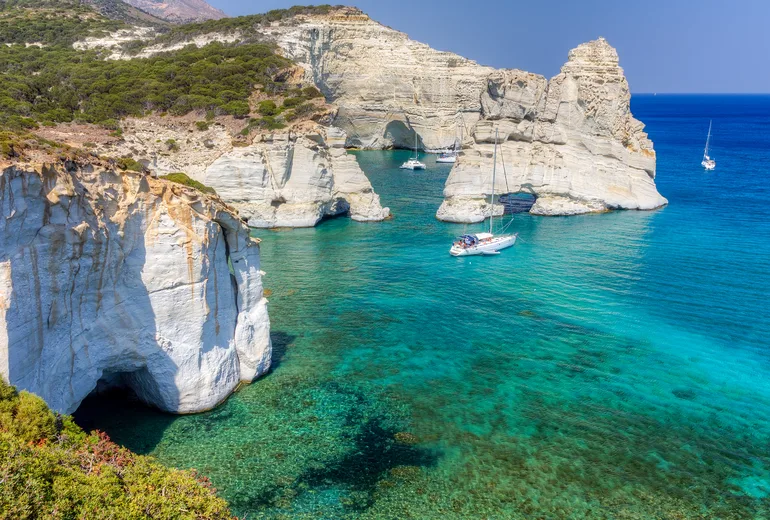
From Sifnos it’s roughly 15 NM south to Milos, the volcanic island that delivers the most dramatic swimming of the trip. Kleftiko, on the southwest tip, is a maze of white sea-stacks and swim-through arches — get there early before the day boats from Adamas. Anchor overnight in the lee at Kleftiko only in settled weather; otherwise tuck into Pollonia or the big bay at Adamas. Tiny Kimolos, a short hop north, has a single sleepy chora and a beach taverna at Prassa worth the dinghy ride.
The second arc is where the Cyclades earn their reputation. Distances stretch, the meltemi gets a vote, and the islands feel rawer.
Folegandros is about 20 NM southeast of Milos. The Chora here sits on a cliff edge and stays gloriously low-key — Pounta square, three tavernas, a church you climb to at sunset. From here you can run a half-day down to the Santorini caldera, sail the rim under the cliffs, and come back without paying caldera mooring fees or fighting cruise-ship traffic. Anchoring inside the caldera is deep and tricky; most crews are happier admiring it from the water and sleeping back at Folegandros or Ios.
The leg east to Amorgos is the longest of the trip — plan 35–40 NM and an early start. Amorgos rewards it. Aegiali in the north is a calm, beachy anchorage; the clifftop Hozoviotissa monastery is a sweat-worthy climb that pays you back in views. This is the deep Aegean, so watch the meltemi closely; if it’s blowing hard from the north, Katapola on the sheltered side is your bolt-hole.
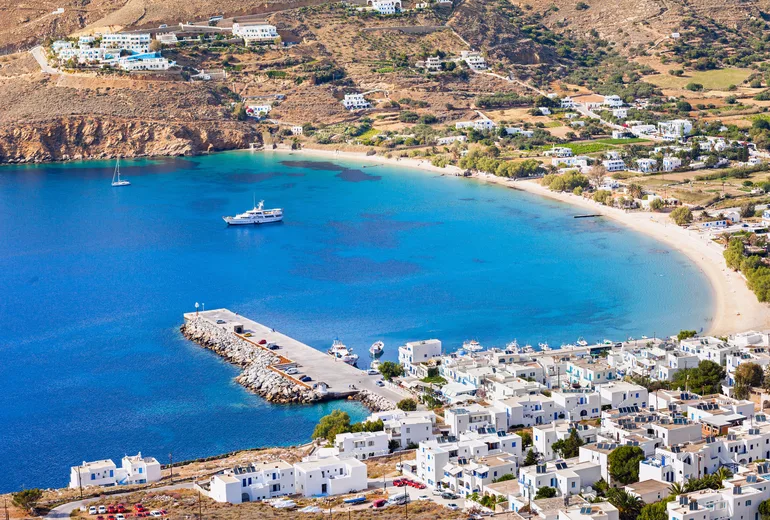
Work back west through Koufonisia and Schinoussa — pin-clear shallows, one tiny chora each, the kind of anchorages that ruin you for anywhere busier. Pano Koufonisi has a single sandy street and a string of coves along its south coast; anchor off Pori and walk the coastal path to the natural rock pool at Piscina. Schinoussa, just across the channel, has perhaps forty year-round residents and a couple of tavernas in the hilltop chora where the menu is whatever was caught that morning.
Then on to Naxos, the largest and greenest of the Cyclades, where the marble Portara gateway frames the sunset and the Chora’s alleys climb to a Venetian kastro. This is the place to eat well off the boat too — Naxian gruyère-style cheese, citron liqueur, potatoes that locals will tell you are the best in Greece. Provision properly here; Naxos has the best supermarkets you’ll see all fortnight, and the long waterfront makes for an easy stern-to berth.
Day fourteen brings you to Paros, an easy 12 NM from Naxos. Naoussa’s old fishing port, with blue taverna chairs spilling onto the quay and caïques tied up beside the ruined Venetian breakwater, is a fitting last night. Eat the day’s catch by the kilo, watch the harbour lights come on, and tally up the islands behind you. From Paros it’s a manageable run back to Lavrion or Alimos the next morning — or stay one more night if your charter allows a late drop-off.
By the end you’ll have sailed both faces of the Cyclades: the sheltered western line where the islands feel lived-in and slow, and the open eastern reaches where the Aegean shows its teeth. Eleven islands, two weeks, and a route that almost no one rushing a single week ever sees in full. That contrast — Sifnos’s bakeries one week, Amorgos’s cliffs the next — is exactly what the extra fortnight buys you.
If you’d rather do half this in a single week first, our seven-day Cyclades sailing itinerary covers the western core, and the slower-paced September Cyclades route is ideal once the meltemi eases. Booking early matters for a two-week slot in peak season — see why in our 2027 early-bird charter timeline.
Not at all — it’s arguably the sweet spot. A fortnight lets you absorb a couple of meltemi days without wrecking the plan, and it opens up the eastern islands like Amorgos and the Small Cyclades that a seven-day charter rarely reaches. Crews who’ve done both usually say the two-week version felt less rushed, not longer.
Late May to mid-June and the first three weeks of September are the calmer windows, with the meltemi typically softer and the anchorages far less crowded. July and August are reliably sunny but the northerly meltemi can blow 25–35 knots for days, which is exactly why this itinerary builds in layover nights.
This is a route for a confident skipper or a chartered one. The western half is forgiving, but the eastern legs to Amorgos and the open crossings can serve up real wind and sea. If your bareboat experience is light, take a skipper for at least the first few days, or charter fully crewed.
Yes, and you should plan to. The beauty of the two arcs is that each can stand alone — if a hard meltemi sets in during week two, you can linger on the sheltered western islands and skip the eastern run entirely. The two blank layover days exist precisely for this kind of call.
Ready to plan your own fortnight? Browse our Greek catamaran destinations and routes and we’ll help you match boat, base and dates to the season.