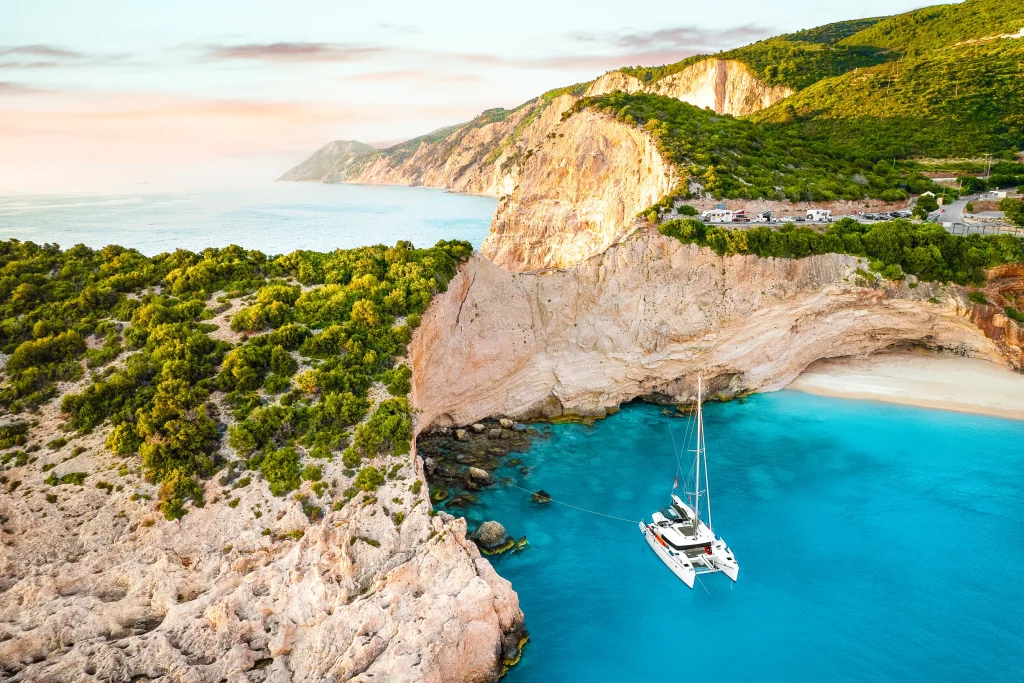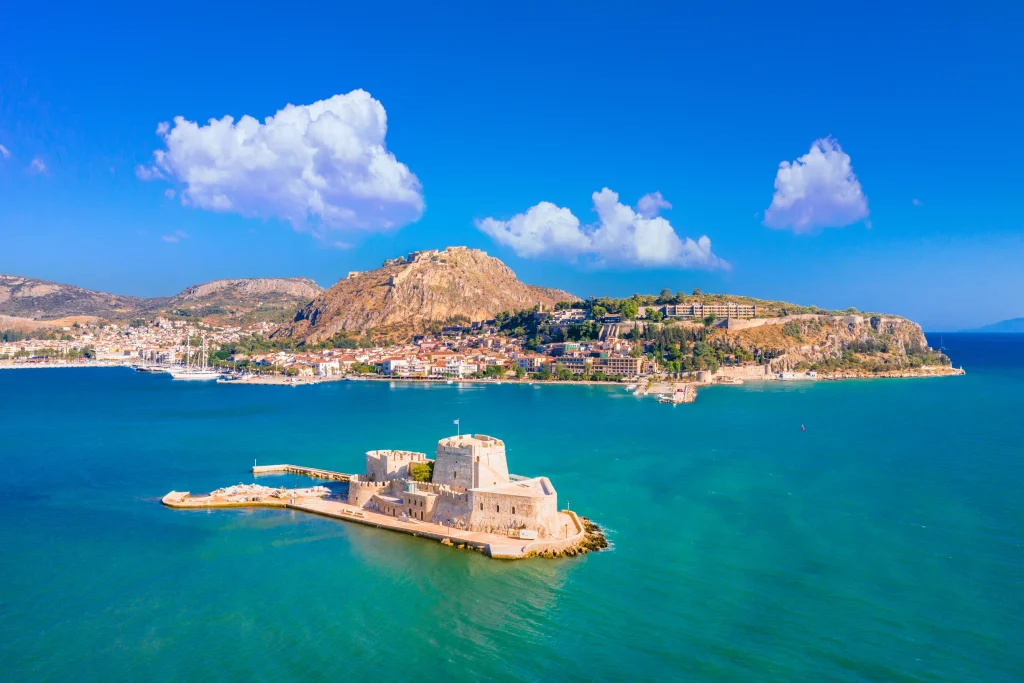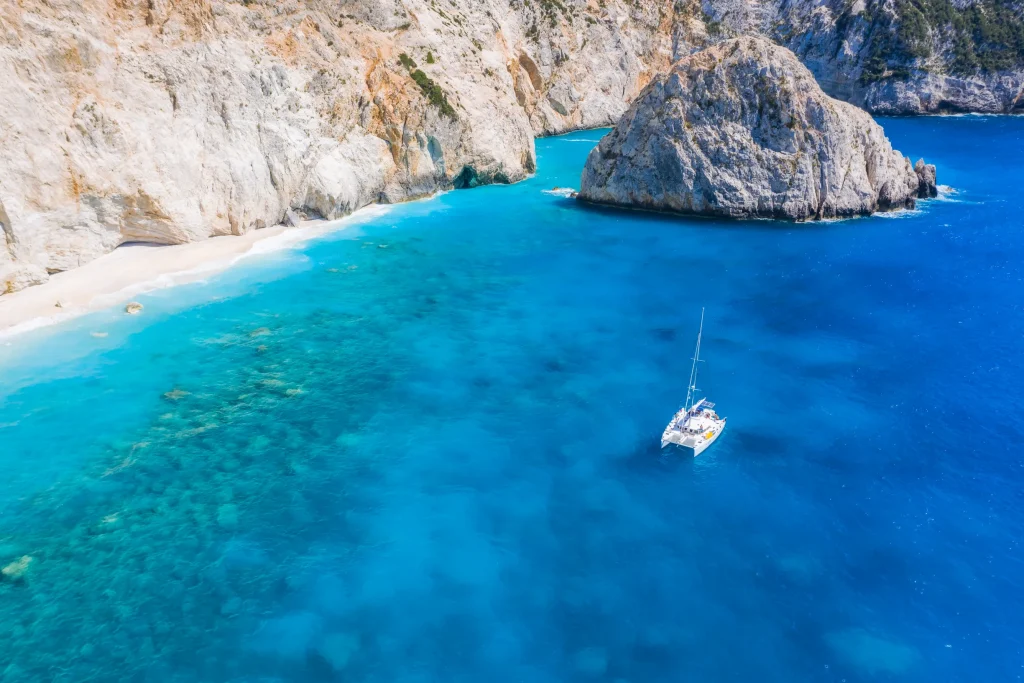
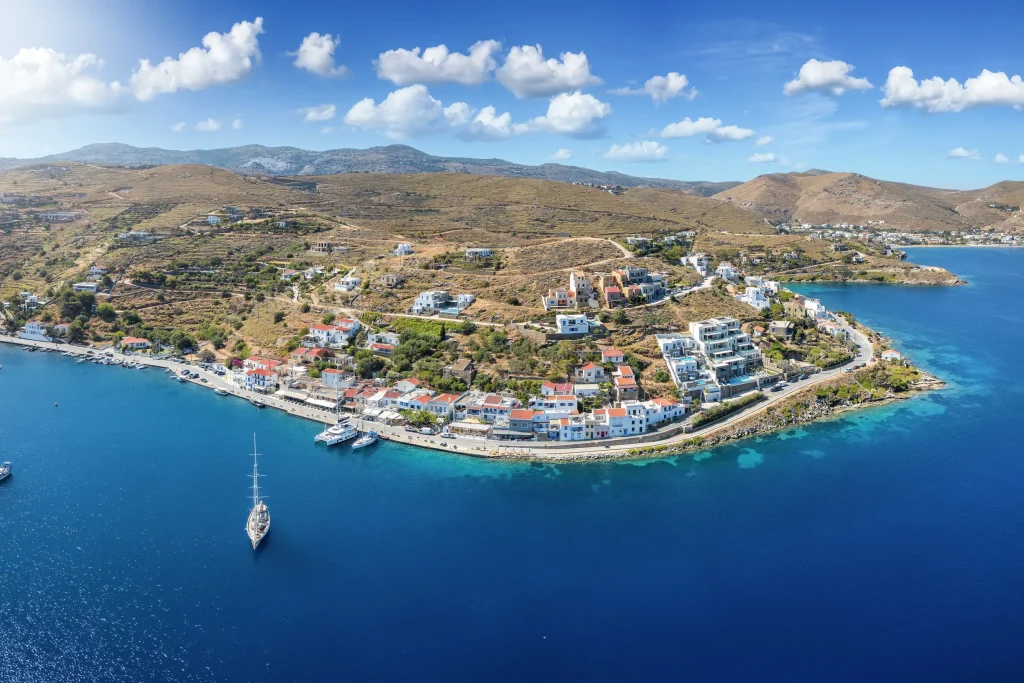
Two Weeks, One Loop: The Complete Cyclades Catamaran Circuit for 2027
The complete two-week Cyclades catamaran loop from Athens, with layover days built in to absorb the meltemi.
Read more
You sit down at a harbour taverna after a long sail, the waiter waves you to the fridge, and the menu lists fish not by the plate but by the kilo. This is where the famous Greek bill surprise is born — not from dishonesty, but from a system most visitors never have explained. Here is how greek taverna fish prices per kilo actually work, so a hungry charter crew can order well and pay roughly what they expected.
The short version: fresh fish is sold by weight because it is bought by weight, and the price you see is per kilo of raw, uncleaned fish. You pick the fish, it is weighed in front of you, and the bill follows the scale. Master that ritual and the per-kilo board stops being a trap and becomes the best meal of the week.
Wild fish lands in irregular sizes and changes price daily with the catch, so a fixed per-plate price would either cheat the kitchen or the guest. Selling by weight keeps it honest: the taverna pays the boat by the kilo at dawn and passes that on. The figure chalked on the board, say €60 or €75 a kilo, is for the whole fish before cleaning, which is why a single sizeable fish can comfortably feed three or four people once the head and bones are accounted for.
The other thing to know is that the price gap between species is huge, and it tracks scarcity rather than snobbery. Farmed sea bream and sea bass are cheap and abundant; true wild fish and shellfish are not. Knowing roughly which band a fish sits in is the single most useful skill at the fridge, and it is what stops the end-of-meal arithmetic from stinging. Once you understand that greek taverna fish prices per kilo are simply the dawn market price passed straight to your plate, the board stops feeling like a trap.
Treat these as planning bands, not quotes, since they swing with island, season and the morning’s catch. Farmed tsipoura (sea bream) and lavraki (sea bass) typically run €12–20 a kilo and are the budget backbone of any crew dinner. Wild versions of the same fish jump to €45–70. Red mullet (barbouni) and the prized fagri (common dentex) or sfyrida (grouper) sit at the top, often €60–90 a kilo on a good island. Smaller fry — gavros (anchovy), marides (picarel) and sardeles — are cheap and brilliant, usually €8–14 a kilo and served crisp by the heap. Octopus and calamari are sold by portion or weight and land somewhere in the middle.
Do not order fish blind from the menu. Ask to see the day’s catch — every serious fish taverna keeps it on ice in a display fridge and expects you to look. Point at the specific fish you want, ask the price per kilo, and ask them to weigh it in front of you before it goes to the grill. A polite “poso zygizei?” (how much does it weigh?) and a glance at the scale settle everything before cooking starts. If a fish weighs more than your table needs, ask them to pick a smaller one or to weigh two of you a single larger fish to share.
This is normal, expected behaviour, not rudeness. Locals do exactly the same. The misunderstandings that make the news almost always come from a table that ordered “some fish” without checking the species, the price or the weight, then balked at a kilo of wild grouper. Five seconds at the scale removes the entire problem.
The price usually tells you, but the fish does too. Farmed bream and bass are uniform in size, plump-bellied and often have slightly worn fins from the cage; wild fish vary in size, have brighter, firmer bodies and clean, sharp fins. Clear, bulging eyes and bright red gills mean fresh, full stop. A reputable taverna will tell you straight whether a fish is wild (psari tou vrahou or simply “agrio”) or farmed (psari ichthyotrofeiou) if you ask. Paying wild prices for farmed fish is the one thing to watch, and asking directly is your protection.
Here is the practical maths for a full boat. A hungry crew of eight does not need eight whole fish. A sensible order is two or three larger fish to share — perhaps a couple of farmed bream and one wild fish as the centrepiece — plus a big plate of fried marides or calamari, a Greek salad, tzatziki, grilled vegetables, bread and a kilo or two of house white. Built that way, a generous fish dinner for eight on a typical island lands around €30–45 a head with wine, less if you lean on the cheaper fish and the fried small fry.
If you want the wild grouper night, expect €55–70 a head and order it knowingly. The trick is balance: one show-stopping wild fish for the table, surrounded by cheaper plates that fill everyone up. That is exactly how Greek families eat by the sea, and it keeps both the meal and the bill in proportion. For stocking the galley between taverna nights, our 2026 provisioning cost guide breaks down what a week of self-catering really runs to.
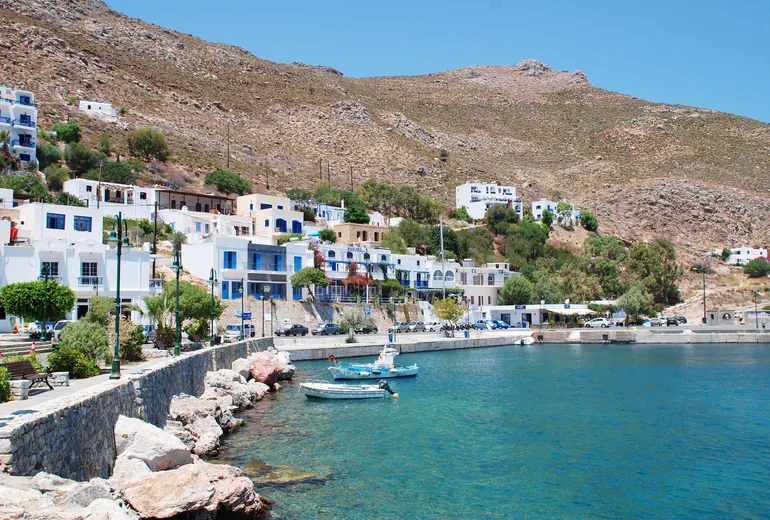
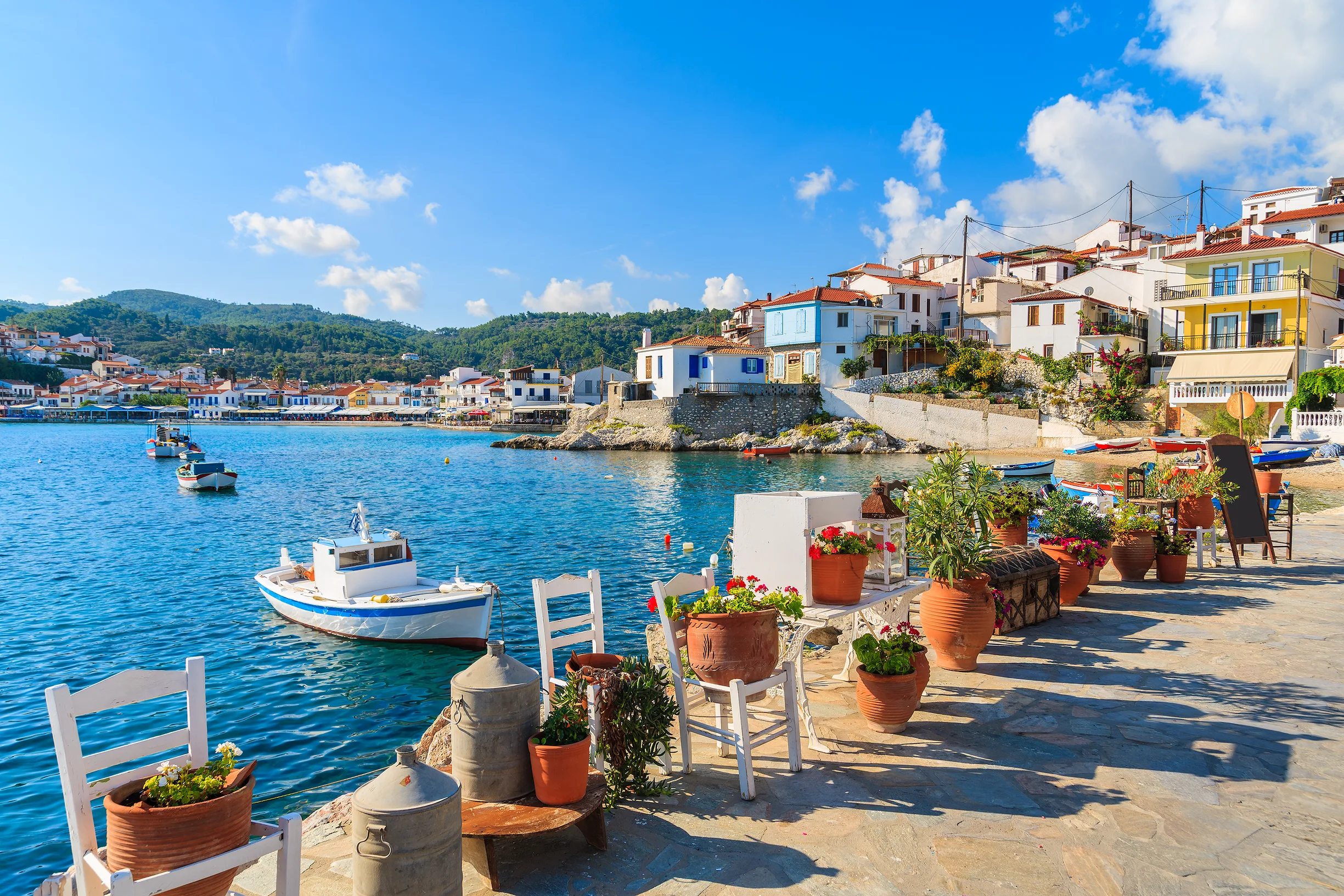
The best fish follows the fishing boats. On islands with a working fleet — think the small caique harbours of the Cyclades, the quays of Naoussa on Paros or Kokkari on Samos — the taverna behind the fishermen usually has the day’s catch on ice by mid-morning. Ask which fish came in that day; “ti freska psaria echete simera?” works wonders. Avoid places that can never tell you the weight or the origin, and favour the ones where the owner walks you to the fridge without being asked. The dock etiquette that smooths these evenings ashore is covered in our guide to taverna and dock manners in Greece.
A fish dinner is one of the costs that surprises crews who have only thought about the boat itself. Folded sensibly into the week, eating fresh fish two or three nights ashore adds up to a meaningful line in the trip budget, but it stays reasonable once you understand the per-kilo board and lean on the cheaper species between treats. If you are still pricing the whole holiday, our breakdown of what it costs to rent a catamaran in Greece sets the dining spend in proportion against the charter fee, fuel and berthing.
You do not need fluent Greek, just a handful of phrases. Psari is fish; freska is fresh; agrio is wild and ichthyotrofeiou is farmed. “Mboro na do ta psaria?” — may I see the fish? — opens the fridge. “Poso to kilo?” asks the price per kilo. Used with a smile, these turn the waiter into an ally, and you will often get a better fish and a fairer weigh than the table that just pointed at the menu. The fish dinner is one of the genuine pleasures of a Greek charter; a little knowledge is all it takes to enjoy it without the famous shock at the end.
Because wild fish lands in irregular sizes and its price changes daily with the catch. Selling by weight keeps pricing honest — the taverna buys from the boat by the kilo and passes that on. The board price is for the whole, uncleaned fish, so always check the weight before it is cooked.
It depends heavily on species. Farmed sea bream and sea bass typically run €12–20 a kilo, wild versions €45–70, and top fish like wild grouper or dentex €60–90. Small fried fish such as picarel and anchovy are cheap at around €8–14 a kilo. Prices shift by island and season.
Ask to see the catch, point at the exact fish, confirm the price per kilo and ask them to weigh it in front of you before cooking. This is completely normal in Greece. Most bill surprises come from ordering “fish” without checking species, weight and price first.
Farmed bream and bass are uniform in size, plump and sometimes have worn fins, while wild fish vary in size with brighter bodies and clean fins. Clear eyes and red gills signal freshness either way. The price is the biggest clue, and a good taverna will tell you straight if you ask whether it is wild or farmed.
A balanced order — two or three shared fish, a plate of fried small fish or calamari, salads, vegetables, bread and house wine — usually lands around €30–45 a head with wine. Go for a wild grouper centrepiece and it climbs to €55–70 a head. Sharing larger fish keeps both the meal and the bill in proportion.
Planning the food side of your trip? Start with the right boat and base on our Greece catamaran destinations page and build a week around the working fishing harbours where the catch is freshest.