A Long-Weekend Catamaran Escape From Athens: Aegina, Poros & Hydra in 3–4 Days
A realistic 3–4 day Saronic loop from Athens taking in Aegina, Agistri, Poros and Hydra by catamaran.
Read more
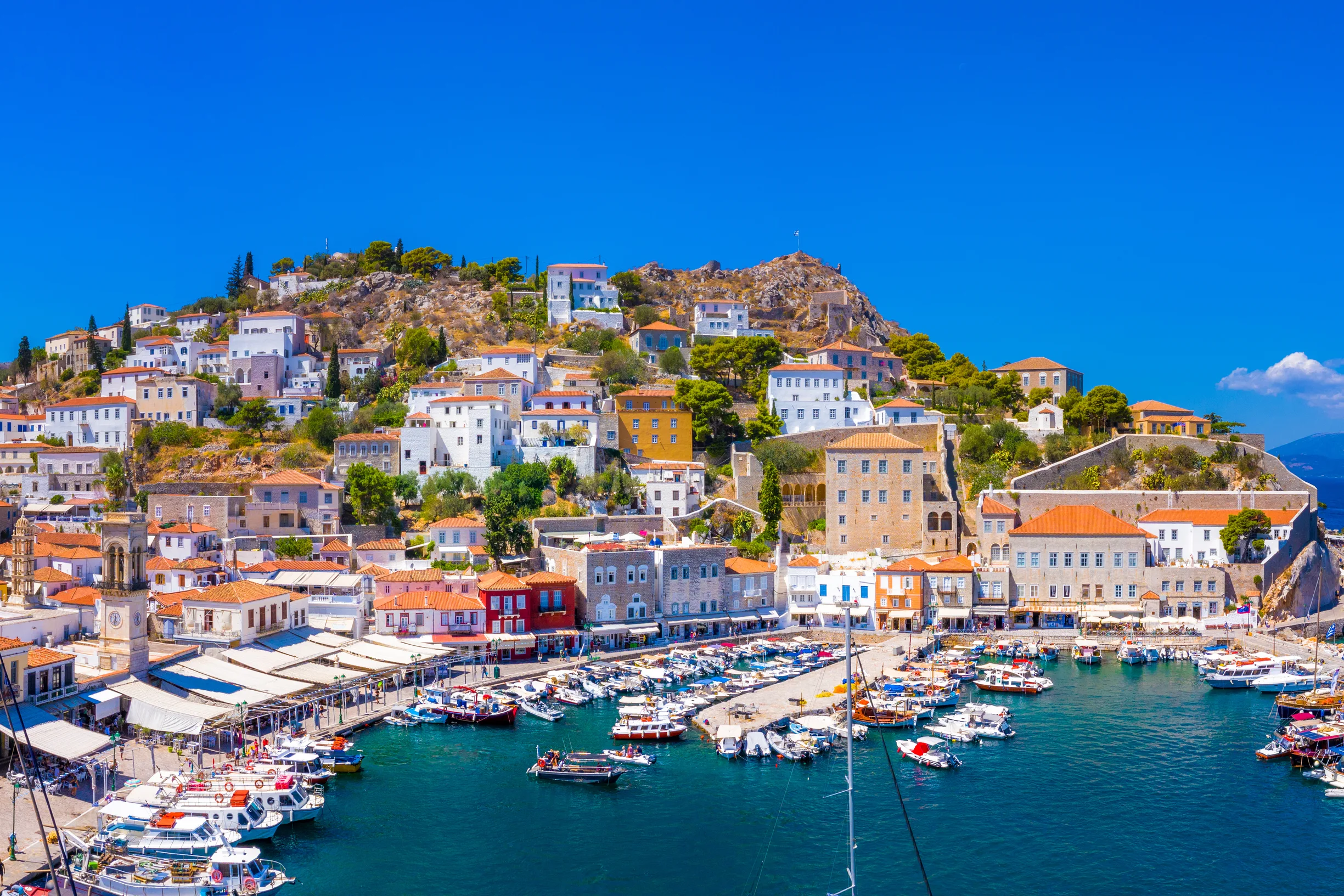
If you are charting a Saronic week and dreaming of tying up under the stone mansions of Hydra, here is the part most island guides skip: the harbour is tiny, the ferry wash is relentless, and a 42-foot catamaran is not the easy guest a monohull is. The honest answer to whether you can do hydra by boat mooring on a cat is “yes, but rarely the way you pictured it.”
This is the working version of Hydra and Spetses, written for crews who will actually be on the helm. We cover where a wide boat fits and where it does not, the Mandraki-plus-water-taxi play that saves the evening, the Spetses Dapia versus Porto Heli decision, and the swim stops at Zogeria and beyond that make the islands worth the effort.
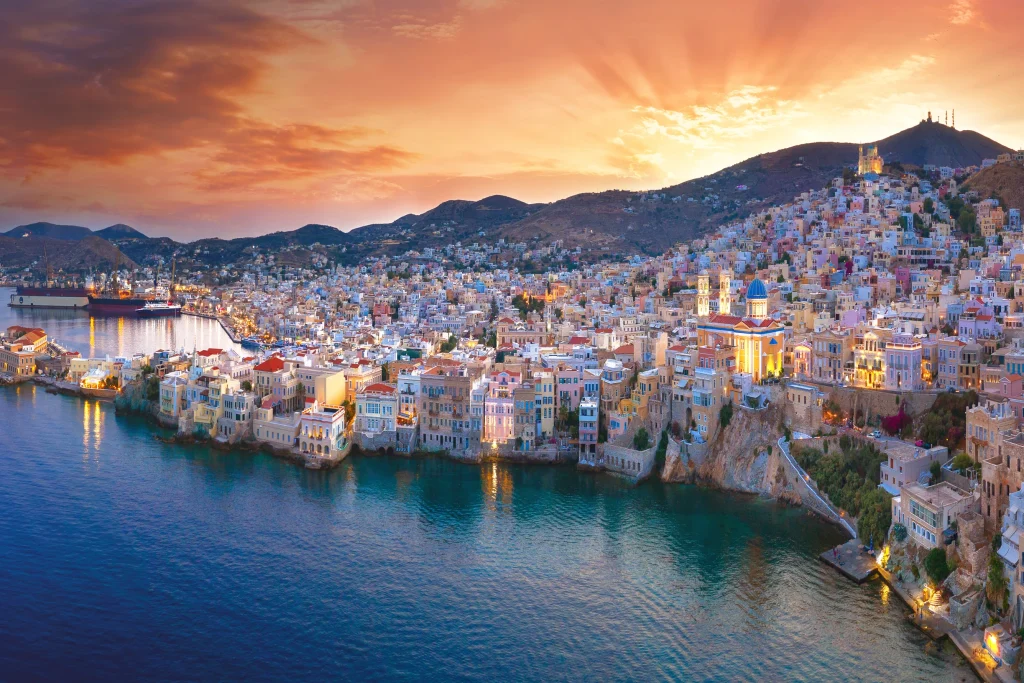
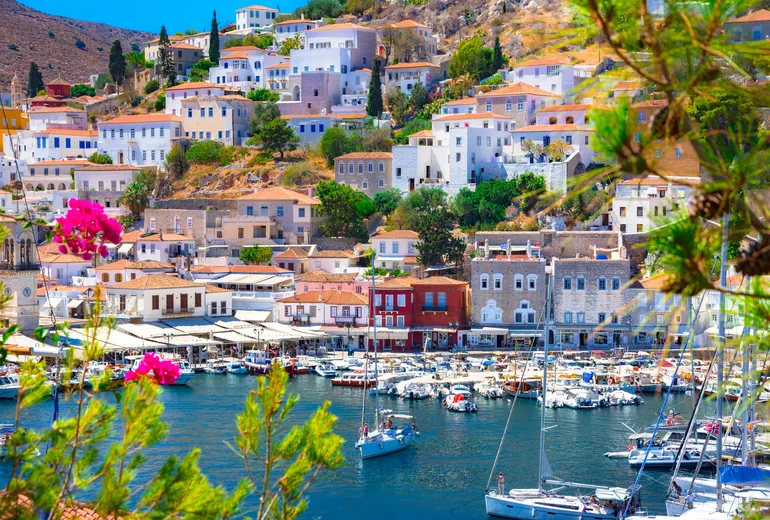
Hydra’s main harbour is a horseshoe of quay barely 150 metres across, ringed by tavernas and lined with day-trip boats, sailing yachts and the odd superyacht muscling in. There are no marina pontoons, no laid moorings for visitors, and no cars on the island at all — only mules and water taxis. You moor stern-to or bows-to against the wall, drop your own anchor off the bow, and hope the boat next door laid theirs cleanly.
For a catamaran the problem is width. Two hulls take up the berth space of nearly two monohulls, and in high season the harbourmaster often waves wide boats away once the wall fills, which on an August afternoon can be by early evening. The second problem is wash. The fast ferries from Piraeus come and go until late, and their wake rolls straight into the quay, snatching at lines and grinding fenders. Crews who do get a spot usually arrive before noon, take whatever the harbour staff point them to, and rig a serious set of springs and fenders.
Go for the quay only if you reach Hydra by late morning in settled weather, ideally early or late in the season when the harbour breathes. In peak August, treat a wall berth as a bonus rather than a plan. If the meltemi is filling in from the north, the harbour entrance gets fluky and the wash worsens; that is the day to anchor off and come in by tender. The whole question of hydra by boat mooring really comes down to timing and humility: arrive early, take what you are given, and have a fallback ready. For how the wind shapes these decisions across the gulf, our notes on sailing weather in the Saronic Gulf are worth a read before you commit a course.
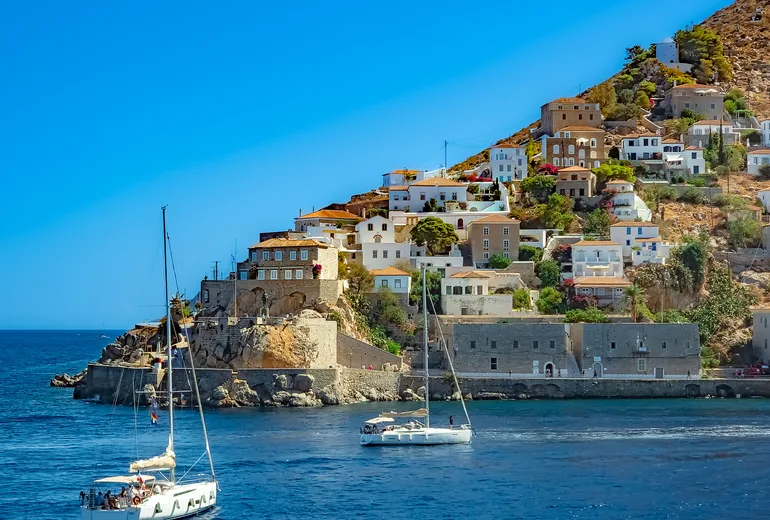
Here is the move that turns a stressful Hydra night into a relaxed one. Skip the main harbour and anchor in Mandraki Bay, about a mile east around the headland. It is a broad sandy bay with room to swing, far enough from the ferry lanes to stay calm, and there is a small beach club and jetty ashore. From there, Hydra’s famous water taxis run a constant shuttle into town, roughly €10–15 each way depending on the hour, so you get the car-free evening, the donkeys clopping up the lanes and dinner on the quay without ever fighting for a berth.
Anchor on sand in 4–6 metres, lay plenty of chain, and set a swing alarm; Mandraki is exposed if the wind backs hard into the south, which is uncommon in summer but not unheard of. The payoff is a flat night on the hook, a morning swim straight off the steps, and a town visit on your own clock. Most crews who try it once never bother queueing for the wall again.
Remember that nothing rolls on Hydra. Provisions move by mule or by hand cart, so do your big shop in Ermioni or on the mainland before you arrive and carry only essentials and a fish-and-vegetable top-up into town. Bakeries open early near the harbour, and the butcher and greengrocer sit just back from the waterfront. Budget for the water taxi both ways if you are anchored out, and carry small notes — the skippers rarely make change for a fifty at midnight.
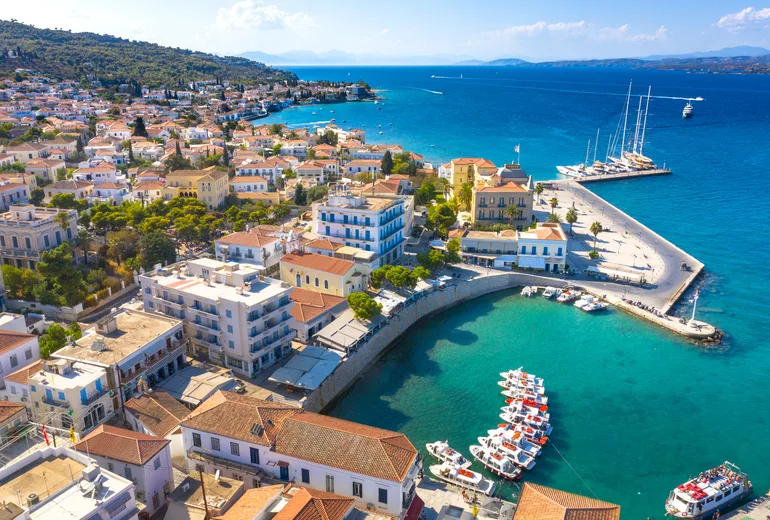
Spetses gives you more room than Hydra but its own quirks. The old Venetian harbour, Palio Limani, is pretty but tight and mostly given over to local and traditional boats. The main quay at Dapia, by the cannons and the cafes, takes visiting yachts stern-to, yet it sits open to wash and afternoon chop and fills fast. A cat can squeeze in early, though many skippers prefer to nose in, take a long lunch and a swim, then move for the night.
The smart overnight is across the narrow Spetses strait at Porto Heli, a near-landlocked bay on the Peloponnese mainland that is one of the best all-weather anchorages in the gulf. Holding is good in mud, there is a town quay and a small marina, tavernas and a supermarket ashore, and it is glassy calm even when the meltemi is howling outside. From Porto Heli it is a ten-minute hop or a water-taxi ride back to Spetses, so you keep the island evening and gain a peaceful night. Spetses itself still bans most private cars in the centre, so expect horse-drawn carriages and scooters instead of traffic.
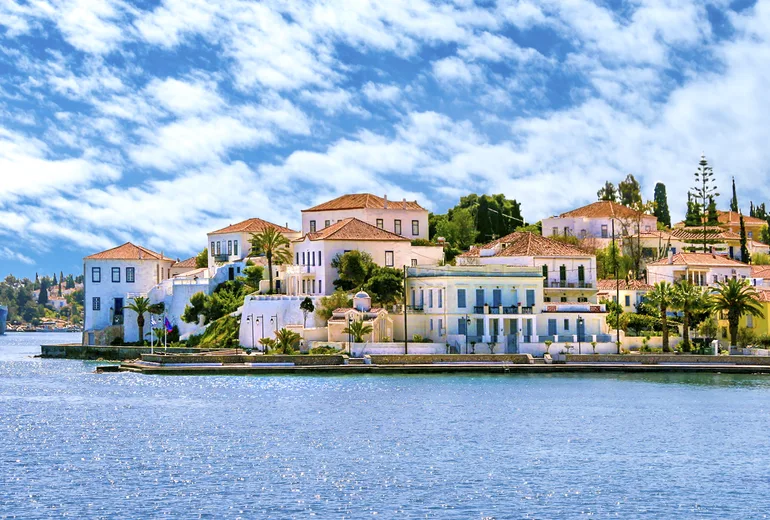
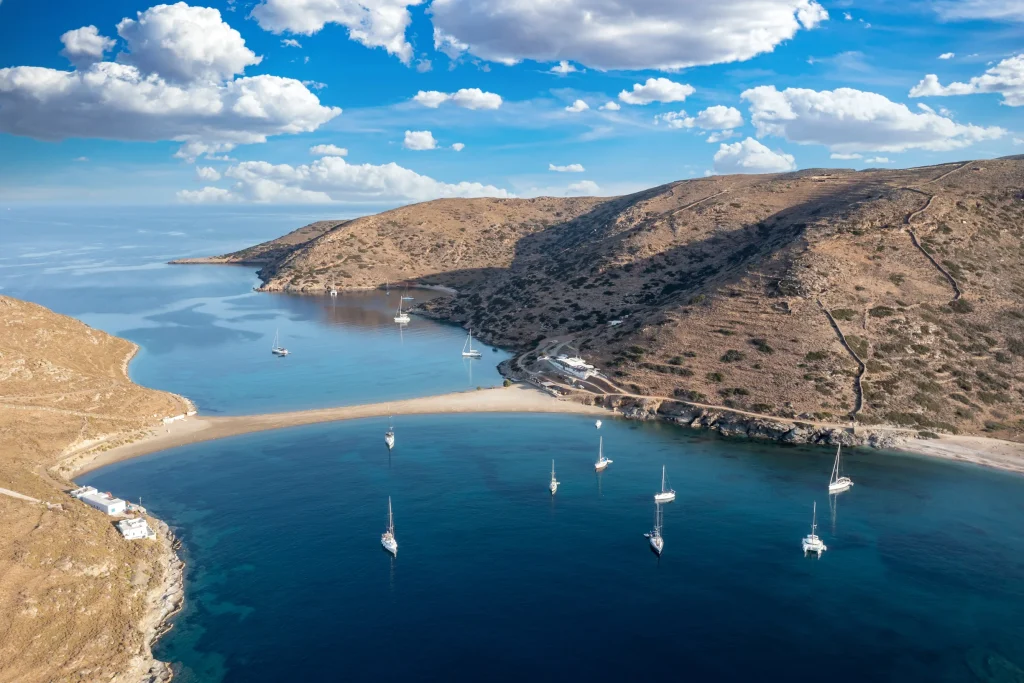
Do not rush past the coves. On Spetses, Zogeria on the northwest coast is a double bay backed by pines, with clear water, good holding in sand and a simple seasonal taverna ashore — a classic lunch-and-swim anchorage about 3 NM from Dapia. Agioi Anargyroi on the south side is sandier and busier with day boats but worth a morning stop before the crowds. Between Hydra and Spetses, the little island of Dokos has the quiet Skindos bay, where the wreck of an ancient ship lies in the shallows and you can swim over Bronze Age history with nobody else around.
Hydra and Spetses sit naturally on the back half of a week out of Athens. A typical run drops down through Aegina or Poros, then Hydra for a town night via Mandraki, across to Spetses and Porto Heli, and back up the Argolic coast. Distances are short and forgiving: Poros to Hydra is about 12 NM, roughly two and a half hours under sail in a steady breeze, and Hydra to Spetses around 15 NM. That leaves real time for swimming rather than just delivering the boat from port to port. If you want a full day-by-day skeleton to hang these stops on, our 7-day Saronic islands itinerary maps the whole loop, and the deeper character of the gulf is drawn out in this piece on the cosmopolitan islands of the Argosaronikos.
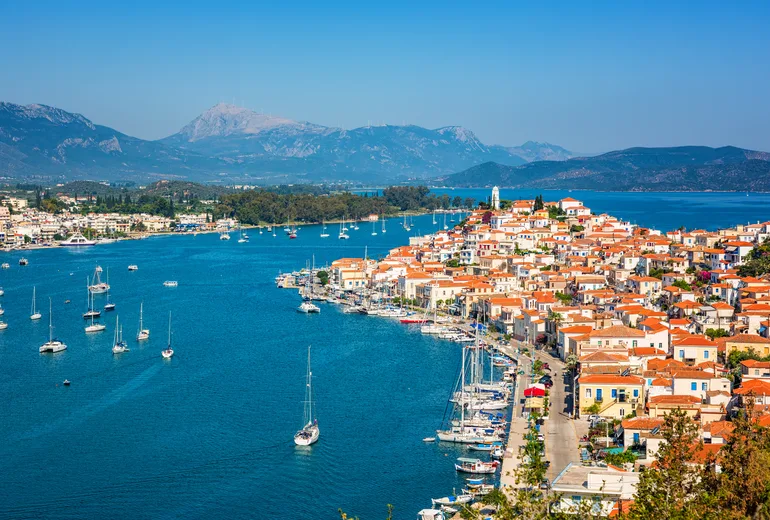
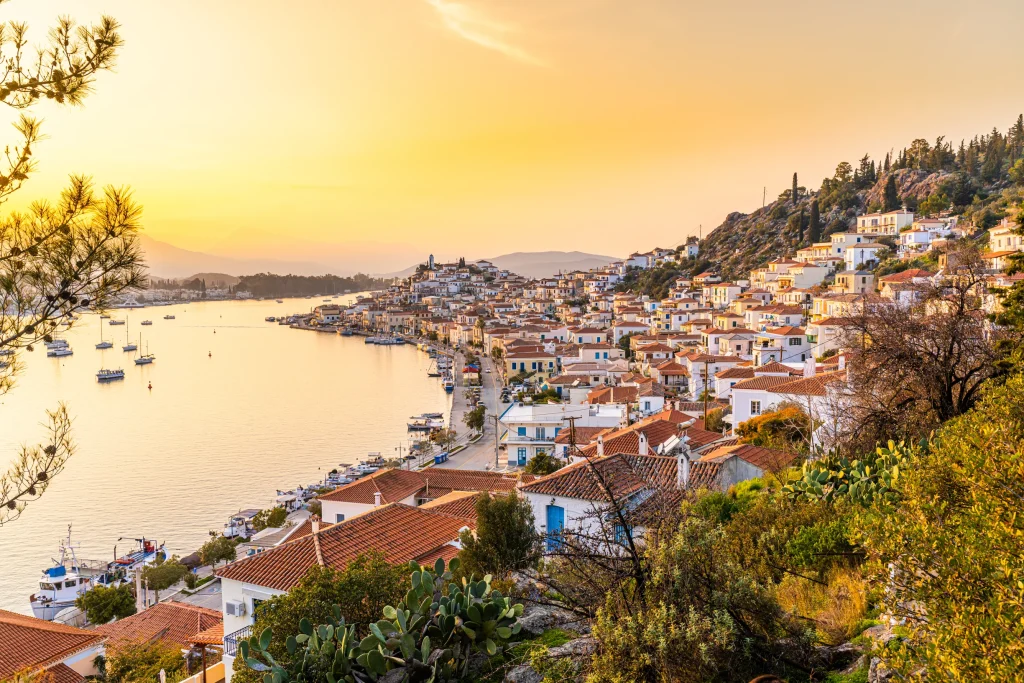
The beauty of basing yourself between Hydra and Spetses is how many calm fallbacks sit within an hour or two. Poros, with its narrow channel and clock-tower town, makes a reliable overnight if the wind turns; Ermioni on the mainland opposite Hydra has a sheltered inner harbour and a good supermarket; and Aegina, on the way back north, rewards a stop for its pistachios and the temple of Aphaia above the pines. Threading these into the route means you are never more than a short, forgiving hop from a secure berth, which is exactly what makes the Saronic so kind to crews still finding their feet on a wider boat.
A few habits keep these stops smooth. Carry a generous fender plan; the wash off both Hydra and Dapia chews through soft gear. Anchor only on clean sand, never in the dark patches of seagrass, both to protect the meadows and to sleep soundly. Keep cash for water taxis and the small island shops, which are not always card-friendly late at night. And build flexibility into your route — if the wall at Hydra is full or the meltemi is up, the Mandraki-and-Porto-Heli plan means you never have to force a berth you will regret at 2am.
Sometimes, but it is not guaranteed. Hydra’s harbour is small and has no laid moorings, so you tie stern-to or bows-to against the wall on your own anchor. Wide catamarans are often turned away once the quay fills, especially in August, so arrive by late morning or plan to anchor in Mandraki Bay and take a water taxi into town.
Mandraki Bay, about a mile east of the main harbour, is the reliable choice. It is sandy with room to swing, sheltered from the ferry wash, and has a jetty and beach club ashore. Frequent water taxis run from there into Hydra town, so you keep the evening without fighting for a berth.
For sleeping, usually yes. Porto Heli is a near-enclosed mainland bay with excellent holding and shelter even in a strong meltemi, plus tavernas and a supermarket ashore. Spend the afternoon and dinner on Spetses, then cross the short strait to Porto Heli for a calm, secure night and an easy water-taxi return.
Hydra is completely car-free; transport is by mule, donkey or water taxi only, which is a large part of its charm. Spetses bans most private cars in the centre too, leaving horse-drawn carriages, scooters and bicycles. Plan your provisioning and luggage around carrying everything by hand or hiring a cart.
On Spetses, Zogeria is a pine-backed double bay with clear water and a seasonal taverna, and Agioi Anargyroi has a good sandy beach. Between the two islands, Skindos bay on Dokos offers calm holding over a famous ancient shipwreck, usually with very few other boats around.
Ready to plan the Saronic on a stable, shallow-draft boat? Browse current catamarans and dates on our Greece catamaran destinations page and build a week around Hydra, Spetses and the quiet anchorages in between.