Greece or Croatia for a Catamaran Charter in 2027? An Honest Side-by-Side
An honest, crew-by-crew comparison of sailing Greece versus Croatia by catamaran, including where Croatia genuinely wins.
Read more
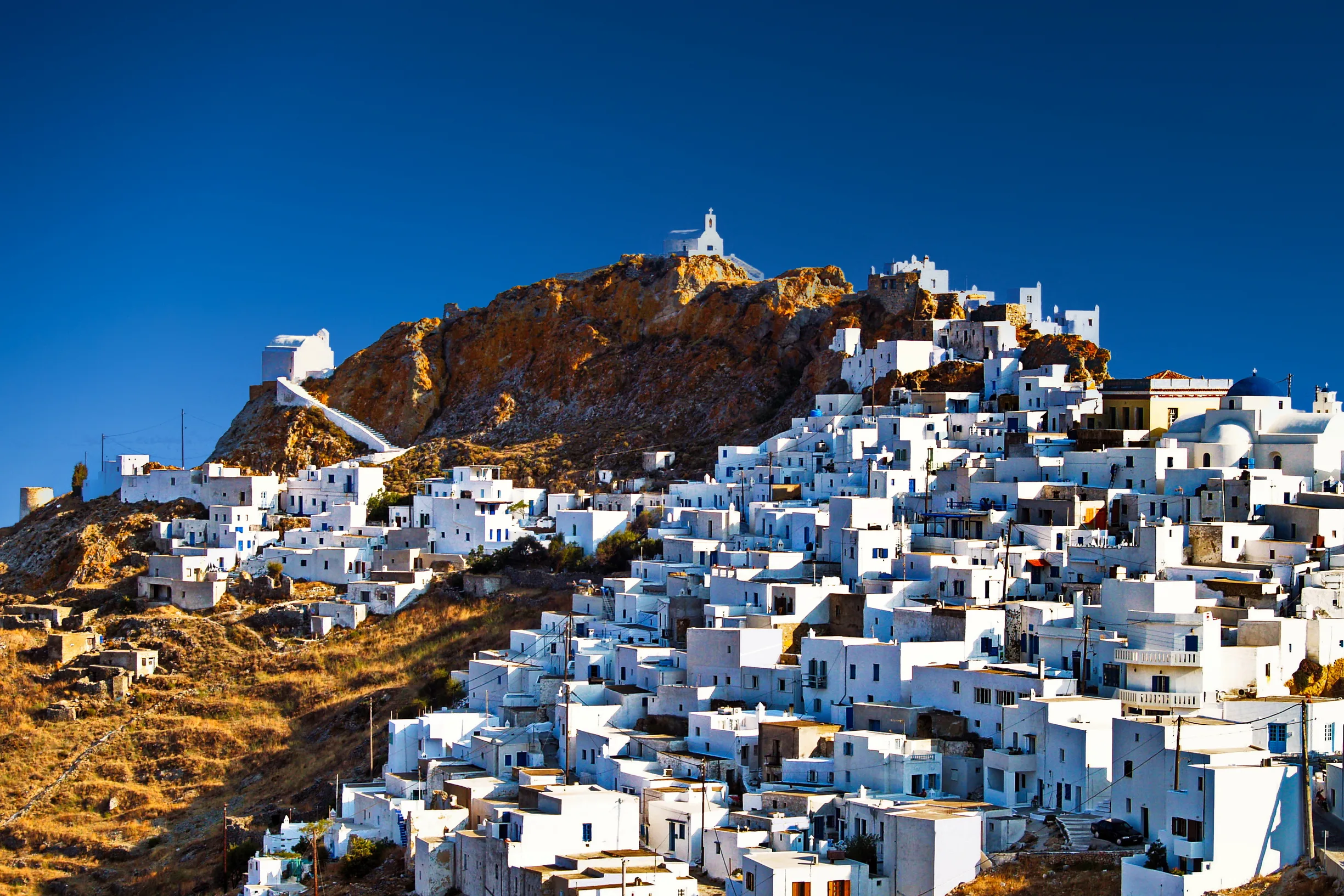
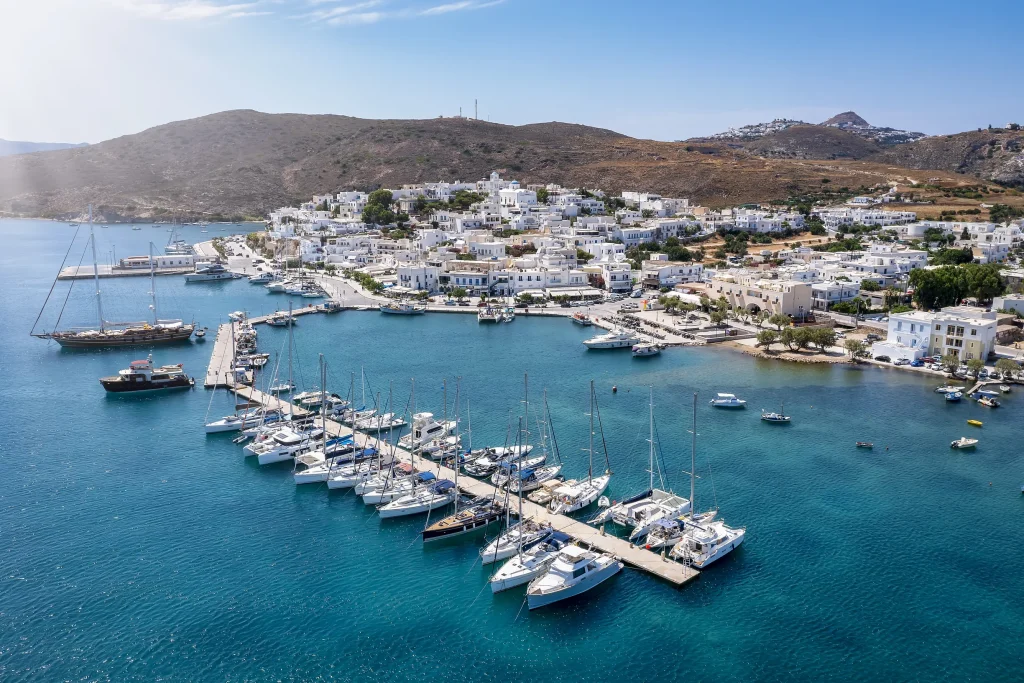
If you’ve read the overtourism headlines and decided Mykonos and Santorini are not the holiday you want, the western Cyclades are the answer. This quiet greek islands sailing route runs down the windward edge of the archipelago — Lavrion, Kythnos, Serifos, Sifnos, Kimolos and Milos — with not a single party port on it.
The rhythm is different here. Bakeries open early, choras still belong to the people who live in them, and most evenings you’ll anchor in a bay with two other boats rather than two hundred. It’s a seven-night loop you can sail at a genuinely relaxed pace, and it’s our pick for 2027 planners who want the Cyclades without the crush.
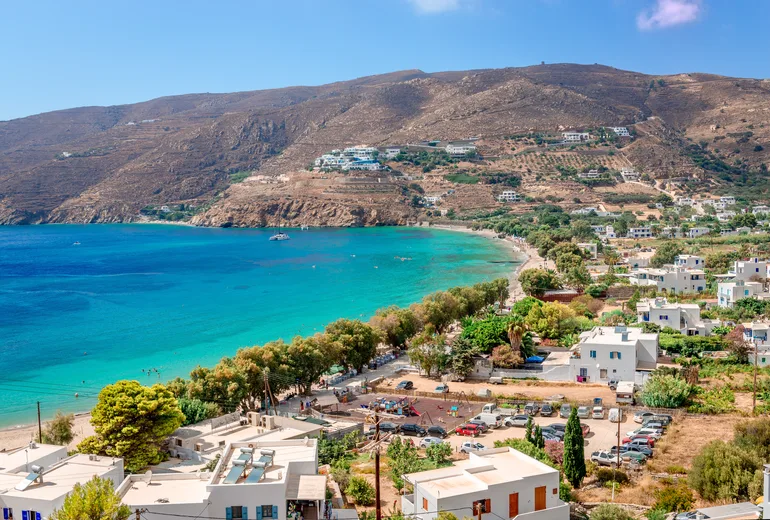
Two reasons. First, geography: these islands sit on the windward side of the Cyclades, so the day-trip catamarans and the cruise ships gravitate east to Mykonos and Santorini instead. Second, there are no airports on Serifos, Sifnos or Kimolos, and only a small one on Milos — which keeps the package crowds away and leaves the islands to ferry travellers and sailors.
That doesn’t mean empty. Sifnos and Milos are well loved by Greeks and in-the-know visitors. But the texture is local, the prices are saner, and the anchorages aren’t a parking lot. For the neighbouring base region, our guide to Kea, Kythnos and the Lavrion base pairs naturally with this route.
This isn’t the itinerary for a crew that wants beach clubs and a DJ. It’s for travellers who’d rather find the good bakery than the famous bar, who enjoy a quiet anchorage and a long swim, and who don’t mind that dinner might be at a taverna with eight tables and no menu in English. If that sounds like a downgrade, it isn’t — it’s the Cyclades most people picture before they arrive and find the reality more crowded. Couples, families with older kids, and groups of friends who’ve done the headline islands and want the real thing all do well here.
The western Cyclades face the meltemi most directly, so timing matters more here than on the sheltered eastern islands. Late May to mid-June is the sweet spot: warm enough to swim, the wind usually gentle, and the islands waking up rather than maxed out. September is the other window — the sea is at its warmest, the crowds thin out after the 20th, and the light turns soft and golden. July and August work, but expect a few days when the meltemi pins you in harbour, which is exactly why a flexible spare day belongs in the plan.
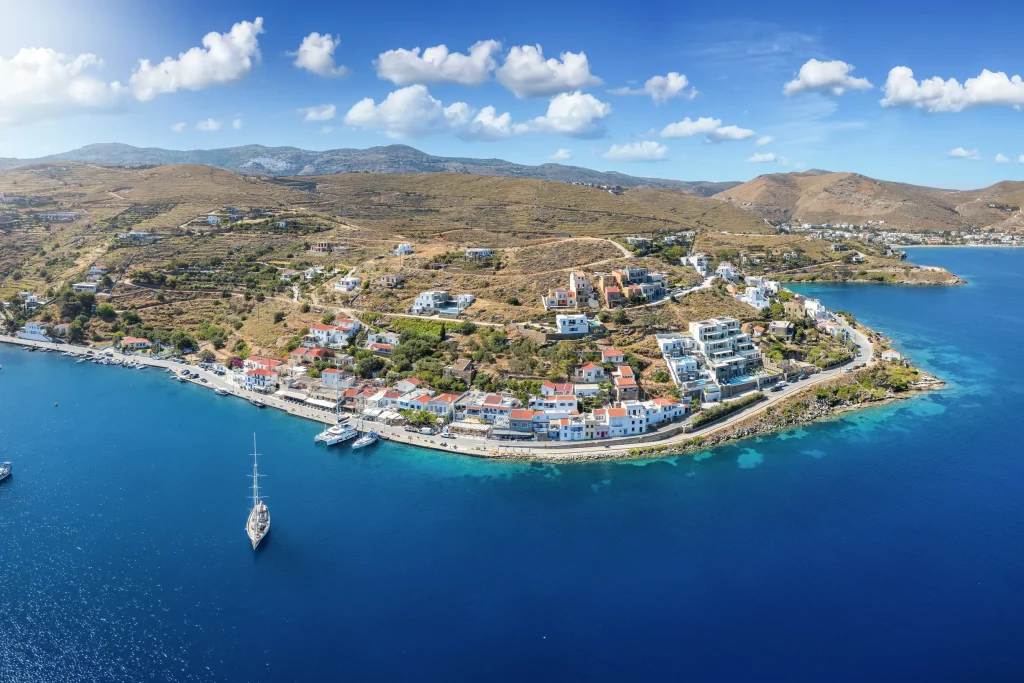
Start at Lavrion, the eastern Attica base that’s closest to the Cyclades and far less hectic than Alimos. The first leg to Kythnos is around 25 NM, three to four hours with the meltemi usually on the beam.
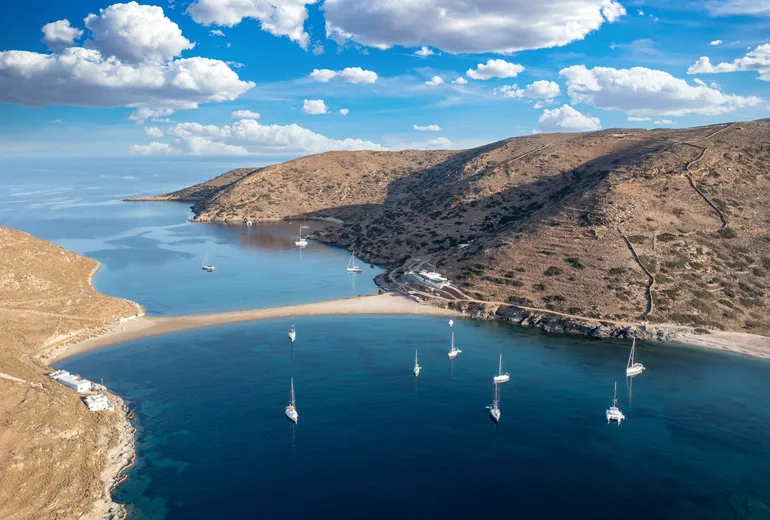
Make for Kolona, the sandbar spit that joins Kythnos to the islet of Agios Loukas. You can anchor on either side depending on the wind, swim across the shallows, and walk up to the little chapel for sunset. There’s a beach taverna for a first-night dinner. It’s a soft landing before the route opens out.
From Kythnos it’s roughly 18 NM south to Serifos. Anchor or take a berth at Livadi, the port bay, then make the pilgrimage up to the Chora — one of the most striking in the Cyclades, white houses spilling down a rocky peak crowned by a chapel and old windmills.
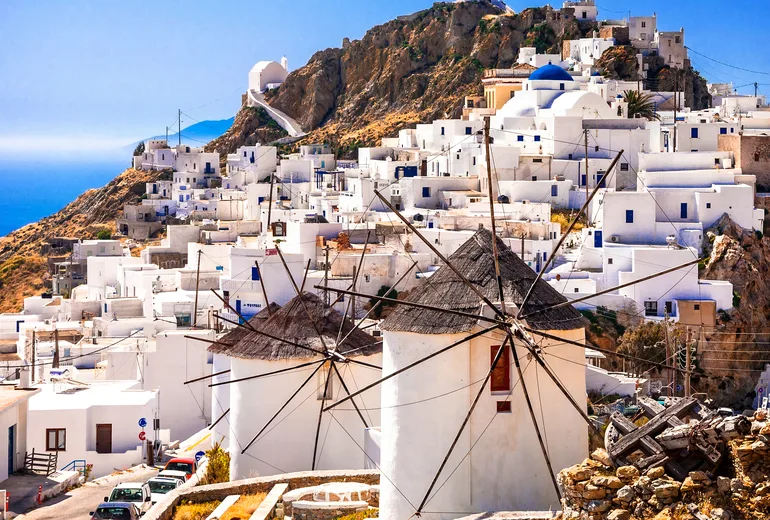
Walk the Chora’s stepped lanes in the late afternoon when the day-trippers have gone and the light turns gold. The island’s iron-mining past gives it a raw, rusty edge — old loading bridges and rusted machinery still cling to the coast at Megalo Livadi, a strangely moving sight against the blue. For food, the upper square in the Chora has tavernas where you’ll hear more Greek than English; try the local revithokeftedes (chickpea fritters) and whatever fish came in that day. Take two nights if the meltemi is up; Livadi is well sheltered and there’s genuinely no rush on this route.
Beyond Livadi, the bays at Koutalas and Vagia on the south and east coasts make good lunch stops or calm-night anchorages when the wind allows. Livadi itself has a small marina-style quay plus room to anchor off the beach, and the holding is good in sand. Keep an eye on the forecast: the western Cyclades catch the meltemi, so if a hard northerly is forecast, Livadi’s sheltered corner is where you want to be.
Sifnos is about 15 NM from Serifos, a short morning sail. This is the gastronomic heart of the western Cyclades and the slow centre of the whole route.
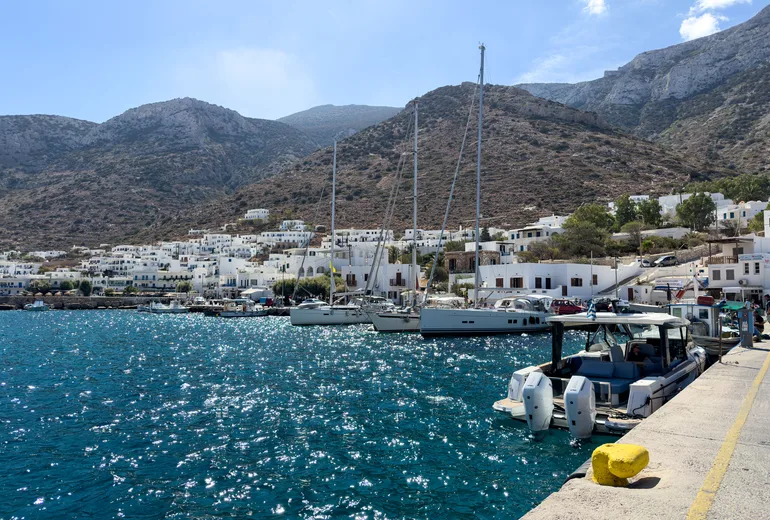
Anchor or moor at Kamares, the main port bay, then split your time between Apollonia (the lively inland capital) and Kastro (the old fortified village hanging over the sea, with a small archaeological museum and a tiny church on a rock you can walk out to). Sifnos runs on clay-pot cooking — it’s the home island of Nikolaos Tselementes, the chef who more or less codified modern Greek cuisine. Order revithada, the slow Sunday chickpea stew baked overnight in the local pottery, and mastelo, lamb or goat baked in red wine and dill. The island’s bakeries — try a honey-soaked melopita or the almond amygdalota — are reason enough to linger. This is the day to do nothing but eat, swim and wander.
Vathy, on the south coast, is a near-landlocked bay with a sandy bottom and a couple of tavernas right on the water — one of the calmest overnight anchorages in the western Cyclades and a lovely alternative to busy Kamares. Platis Gialos has a long beach and good holding too. For dinner, the village of Artemonas near Apollonia hides some of the island’s best tavernas, and the walking path between the two strings together chapels and old mansions in about twenty minutes.
A short hop south brings you to Kimolos, Milos’s tiny sibling, where the single chora is genuinely sleepy and the beach taverna at Prassa serves lunch over pale volcanic sand. Spend a lazy afternoon at anchor here before the grand finale.
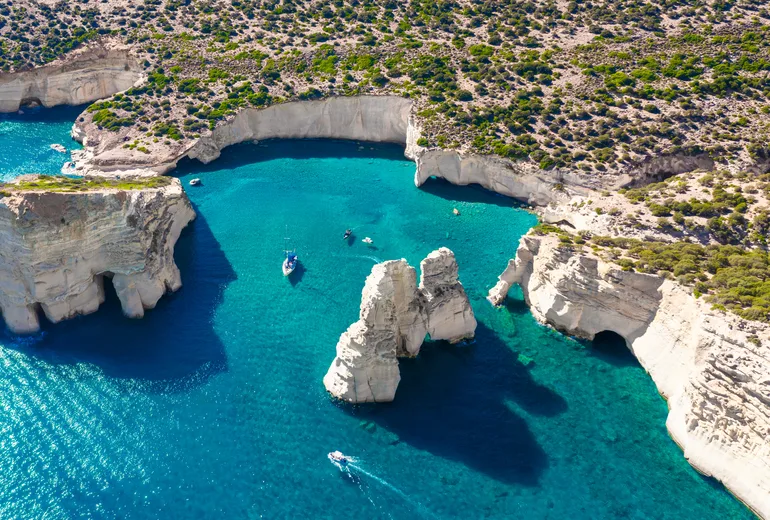
Milos is the volcanic showpiece, about 8 NM on. The headline anchorage is Kleftiko on the southwest coast — a labyrinth of white sea-stacks, arches and swim-through caves best reached early, before the day boats arrive from Adamas. The colours come from the island’s mineral geology: white kaolin cliffs, rust-red rock at Sarakiniko’s lunar moonscape, and the painted boathouse doors of Klima fishing village glowing at sunset. For more than the obvious, our piece on the unexpected things to do on Milos is worth a read before you go.
Milos is also the one island on this route with proper provisioning and a small airport, so it’s a sensible place to top up the boat and, if your itinerary allows, even swap crew. Overnight in the sheltered bay at Pollonia, a low-key fishing village with good fish tavernas and a short hop across to Kimolos, or in the big working anchorage off Adamas. Give yourself two nights here if you can; Milos rewards slow exploration more than any island on the line.
From Milos it’s a longer leg back toward Lavrion — plan an early start and ride the meltemi north on a fast reach, or break the journey with a final night back at Serifos or Kythnos if your charter allows. Either way you finish having sailed the Cyclades that the headlines forgot.
If your dates fall later in the year, the gentler September Cyclades route overlaps with much of this and the anchorages are even emptier. And for the full fortnight version that extends this western line all the way east, see our two-week Cyclades loop.
The western line — Kythnos, Serifos, Sifnos, Kimolos and Milos — is the clear pick. These islands sit on the windward edge of the archipelago, have little or no air access, and draw far fewer day-trippers and cruise passengers than Mykonos or Santorini to the east. You get the Cyclades look and feel without the crush.
It’s a touch more exposed, because the western Cyclades face the meltemi head-on, but the legs are short and the anchorages well sheltered. A confident skipper or a chartered one will find it comfortable, especially in the calmer windows of late May to June and September. Build in a flexible day for strong-wind spells.
Sifnos is the food island — revithada, mastelo and the local bakeries are the highlights, with the best tavernas in Apollonia and Kastro. On Serifos, head to the upper Chora square; on Milos, the fishing-village tavernas at Klima and Pollonia serve the catch of the day. Eating ashore here costs noticeably less than on the famous islands.
Seven nights covers Kythnos to Milos and back at a relaxed pace with a couple of two-night stops. If you have ten days or a fortnight, you can add Folegandros and the Small Cyclades to the east and turn it into a fuller loop without ever touching the party ports.
Want to sail the Cyclades the headlines forgot? Plan it with us via our Greek catamaran destinations page and we’ll match the route to your week.
Your privacy
You can read more about how we protect your personal data and use cookies in our Privacy Policy.
With your consent, we and Google use cookies and similar technologies to store and access information on your device and to process personal data such as your visit to this website, your IP address and cookie identifiers. You can withdraw your consent at any time through “Cookies Settings” at the bottom of every page.
We and Google process data for:
Website analytics and visit statistics, recordings of visits to improve the website, ad measurement and remarketing, storing and accessing information on your device