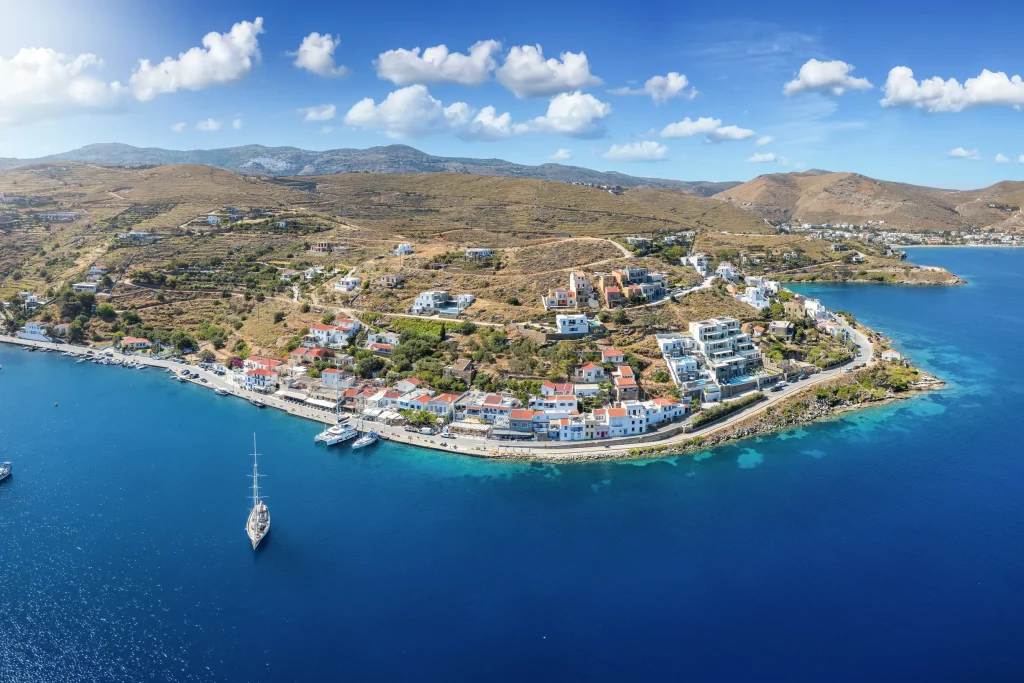
Two Weeks, One Loop: The Complete Cyclades Catamaran Circuit for 2027
The complete two-week Cyclades catamaran loop from Athens, with layover days built in to absorb the meltemi.
Read more
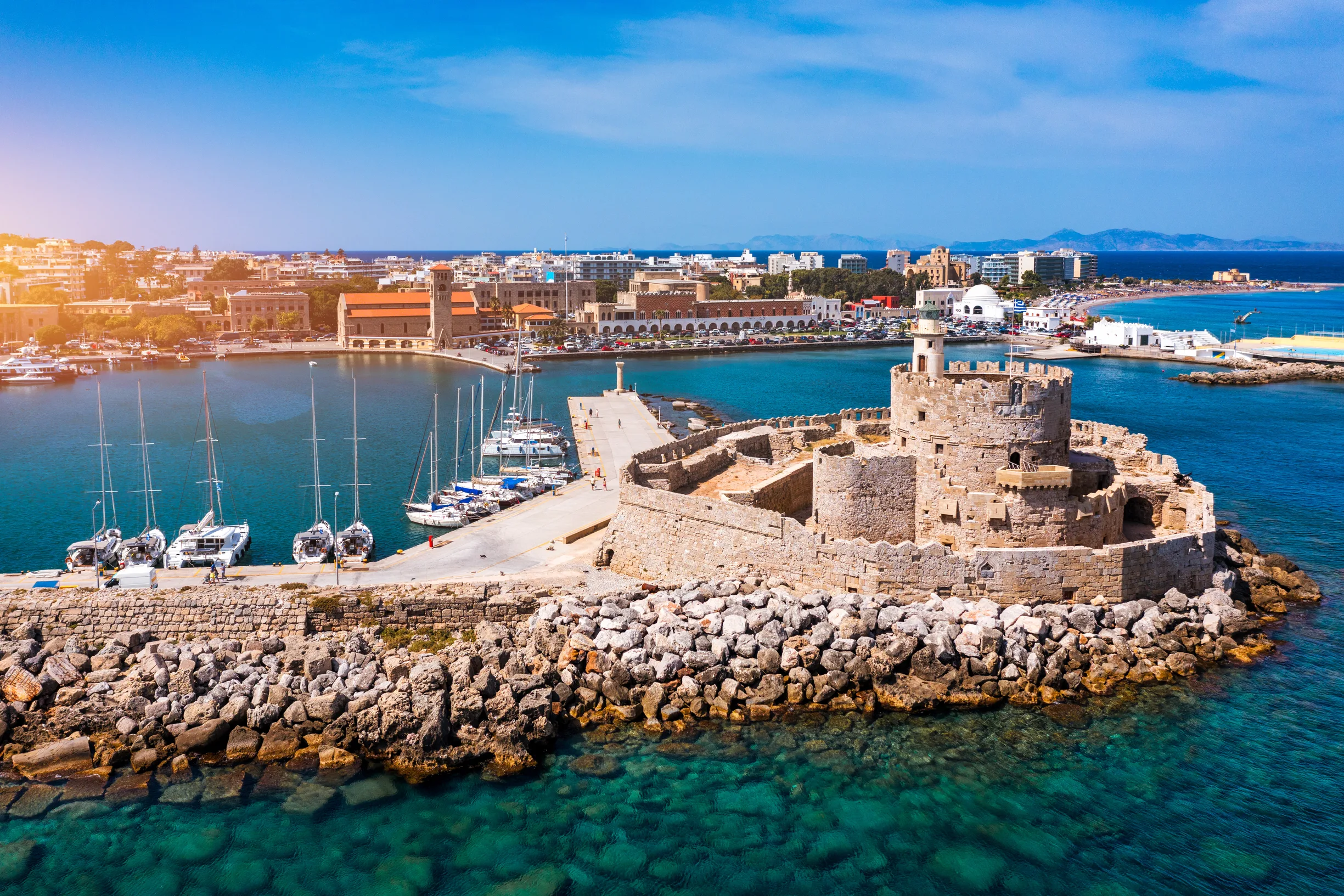
Most charters in Greece are a round trip because that’s what the price list assumes. But there’s one passage where paying the relocation fee genuinely buys you the best sailing in the country: a one way catamaran charter greece run from Athens down to Rhodes. You ride the meltemi instead of fighting it.
The logic is simple. The prevailing summer wind in the Aegean blows from the north, so a southeast-bound route turns the meltemi from an enemy into an engine. Ten days, roughly 280–320 nautical miles, almost all of it downwind or on a fast reach, finishing in the medieval harbour of Rhodes. Here’s how the legs stack up.
A one-way drop-off typically adds €500–1,500 to a Cyclades-to-Dodecanese charter, depending on the operator and the boat. That sounds steep until you realise what you’re not doing: you’re not beating back north into 25 knots of meltemi for three exhausting days at the end of the week. On this route the wind is behind you, the boat sails flat and fast, and you cover ground that a round trip from a single base could never reach.
It’s also one of the few Greek itineraries where a catamaran really earns its keep. The flat, stable platform makes a brisk downwind run feel relaxed rather than rolly, and the shallow draft opens up anchorages a deep-keel monohull skips. If you’re weighing the boat type at all, our overview of the Greek island sailing grounds compared is a good primer.
One more thing the one-way route gives you that a round trip can’t: variety of scenery. You start in the stark, whitewashed Cyclades and finish among the green, Italian-tinged Dodecanese, with an active volcano and a medieval city thrown in. A return charter from a single base keeps you in one cultural register. This one changes character every couple of days.
Practically, a one-way charter means the fleet has to get the boat back from Rhodes, which is why the relocation fee exists. Book it as early as you can — these arrangements are far less common than return charters and the boats that allow them go quickly for peak weeks. Confirm in writing where exactly the handover happens in Rhodes (Mandraki versus the commercial marina), what time, and whether the final clean is included. Flights home from Rhodes are plentiful and often cheaper than from a smaller island airport.
Start at Lavrion rather than Alimos if you can — it’s closer to the Cyclades and saves you the slog out of the Saronic. The first leg sets the tone.
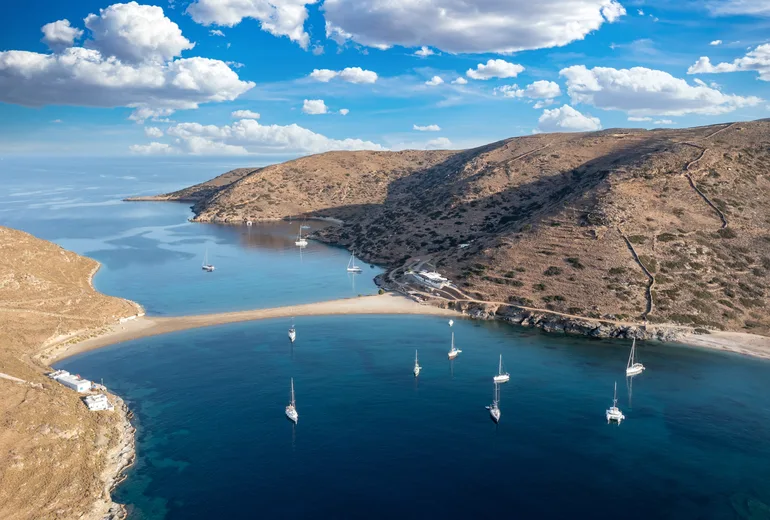
From Lavrion, Kea sits just 12 NM out, an easy first afternoon and a gentle way to shake down the boat and the crew. But if the forecast is settled, push straight to Kythnos (around 25 NM) and the Kolona sandbar, where you can anchor on either side and swim across the shallows. Either way, this is your warm-up before the wind builds. Provision lightly here; the real supermarkets come later on Paros and Naxos, and you don’t want a fridge full of perishables for a route that gets windier as it goes.
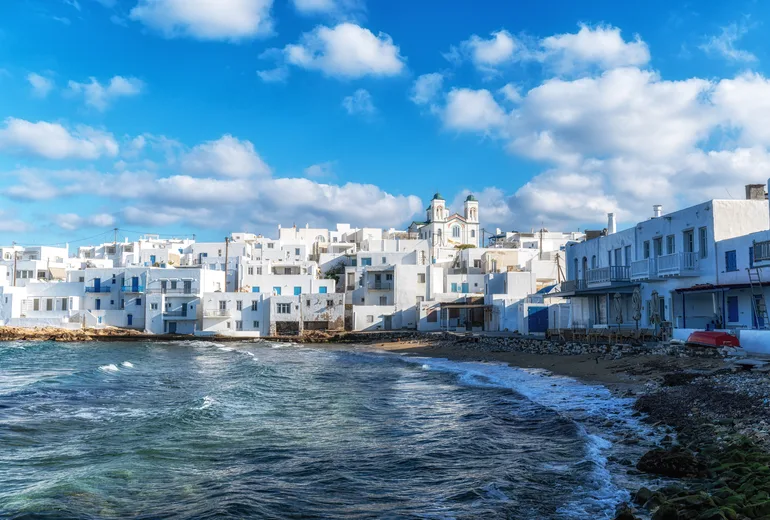
Day two or three takes you to Paros, roughly 35 NM southeast — by now the meltemi should be filling in nicely behind you. Naoussa’s old port is the postcard, but the anchorage off Naoussa bay can get rolly in a strong norther, so the marina at Parikia is the safer overnight. Top up the larder; Paros has proper shops and a good chandlery.
This is where the route leaves the crowds behind. Koufonisia, between Naxos and Amorgos, is a single low island ringed with pale-sand coves you can only really reach by boat. Anchor off Pori beach and swim in water so clear the anchor chain looks like it’s floating. The walk along the south coast to the natural swimming pool at Piscina is worth an hour ashore; the village itself is one narrow lane of cafés and a fish taverna or two.
From Koufonisia it’s about 18 NM to Amorgos. Take Katapola on the sheltered western side; the meltemi funnels hard around the island’s eastern cliffs, so don’t be tempted onto that coast in fresh conditions. The Hozoviotissa monastery, a white wedge glued to a vertical cliff above the sea, is the classic shore excursion — go in the morning before the heat, dress modestly, and the monks may offer you a shot of psimeni raki. Amorgos feels remote in a way the central Cyclades don’t, and that’s the appeal: you’ve earned it by sailing this far east.
The stretch from Amorgos onward is the most exposed of the trip. The meltemi accelerates between the islands, and the seas build over the long fetch from the north. None of it is beyond a competent crew, but timing matters: leave early when the wind is lightest, keep the sails reefed sooner than you think you need to, and always have the next sheltered harbour fixed in your head before you slip the lines. On a catamaran the motion stays kind downwind even when it’s blowing 28 knots — that’s the whole point of this passage.
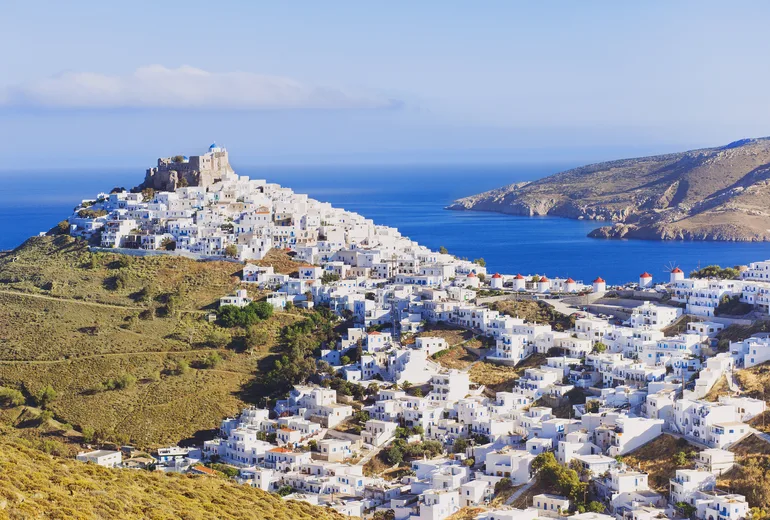
The leg from Amorgos to Astypalaia is open water, roughly 30 NM, and often the fastest sailing of the trip with the meltemi on the quarter. Astypalaia marks the gateway to the Dodecanese — a quieter, Italian-influenced chain. Anchor below the Venetian castle at Chora and eat at one of the harbour tavernas in Pera Gialos. It feels a world away from Mykonos, which is rather the point.
Now the islands change character — bigger, greener in patches, with Ottoman and Italian layers on top of the Greek.
Nisyros is an active volcano you can walk into; the caldera floor at Stefanos steams and smells of sulphur, and the white village of Nikia perched on the rim is one of the most striking in the Aegean. Anchor at Pali on the north coast — the harbour at Mandraki is small and often full. Hire a scooter or take the local bus up to the crater; standing on the warm, cracked floor of a live volcano is not something the Cyclades offer.
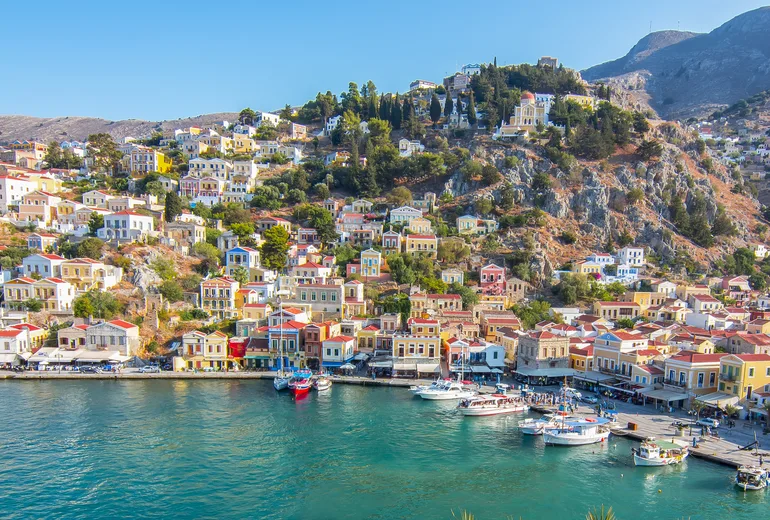
From there it’s a longer hop to Symi, about 35 NM, where the harbour at Gialos is ringed by tiers of neoclassical mansions painted ochre, rose and pale yellow — easily the prettiest port on the route. The town grew rich on sponge-diving in the 19th century and the captains’ houses still climb the slopes in faded grandeur. Berth stern-to on the town quay (get in by mid-afternoon in season), and have dinner ashore among the bell towers. Try the tiny local Symi shrimp, eaten shells and all.
The final leg from Symi to Rhodes is a short, satisfying 20 NM. Aim for Mandraki harbour, where the medieval city walls rise straight from the water and the old stone windmills line the breakwater near the spot where the Colossus is said to have stood. Drop the hook or take a berth, walk the Street of the Knights through the old town’s vaulted gates, and toast a passage you could only sail one way.
If you’ve built in a spare day, the acropolis at Lindos down the east coast is well worth the 25 NM run — the temple of Athena sits on a clifftop above St Paul’s Bay, and you can anchor below and swim ashore. It’s a fitting full stop, and from here you can keep going south into the Dodecanese rather than fly home.
The downwind one-way to Rhodes is the most rewarding passage in Greece for a confident crew in the right season — but it’s not a beginner’s first charter. The open legs demand respect, the harbours fill early in August, and a one-way drop costs more than a return. For nervous crews or a relaxed first trip, a round-trip Cyclades loop is the better call. For everyone else, riding the meltemi instead of fighting it is a memory that outlasts the fee.
For the legs beyond Rhodes — the southern Dodecanese anchorages and provisioning stops — our sailing from Rhodes catamaran itinerary picks up exactly where this one leaves off. And if a fortnight appeals more than a one-way sprint, compare it with the round-trip two-week Cyclades loop.
Yes, though it takes a bit more planning than a round trip. Several fleets allow a one-way drop in Rhodes for a relocation fee, typically €500–1,500. Availability is tighter than for return charters, so book early and be flexible on the exact boat — the route is worth the extra coordination.
The meltemi demands respect, but on a southeast-bound passage it’s largely working for you. The risk is the open legs around Amorgos and Astypalaia, where 30 knots is common in July and August. A catamaran handles it well downwind; the key is timing your departures for the morning lull and having a sheltered bolt-hole in mind for each day.
Ten days is comfortable and lets you linger a night or two. You can compress it into seven if you skip the Small Cyclades and run harder, but you’ll be sailing most days with little slack for weather. Twelve to fourteen days turns it into a relaxed cruise with margin for the inevitable windy spell.
If your group hasn’t sailed the open Aegean in fresh meltemi, a skipper for the whole passage is money well spent — the downwind legs are fast and the harbours unfamiliar. Confident crews with Dodecanese experience can run it bareboat, but plan conservatively around the wind.
Want help pricing a one-way passage and securing the drop-off? Start with our Greek catamaran destinations page and we’ll build the route around your dates.