A Long-Weekend Catamaran Escape From Athens: Aegina, Poros & Hydra in 3–4 Days
A realistic 3–4 day Saronic loop from Athens taking in Aegina, Agistri, Poros and Hydra by catamaran.
Read more
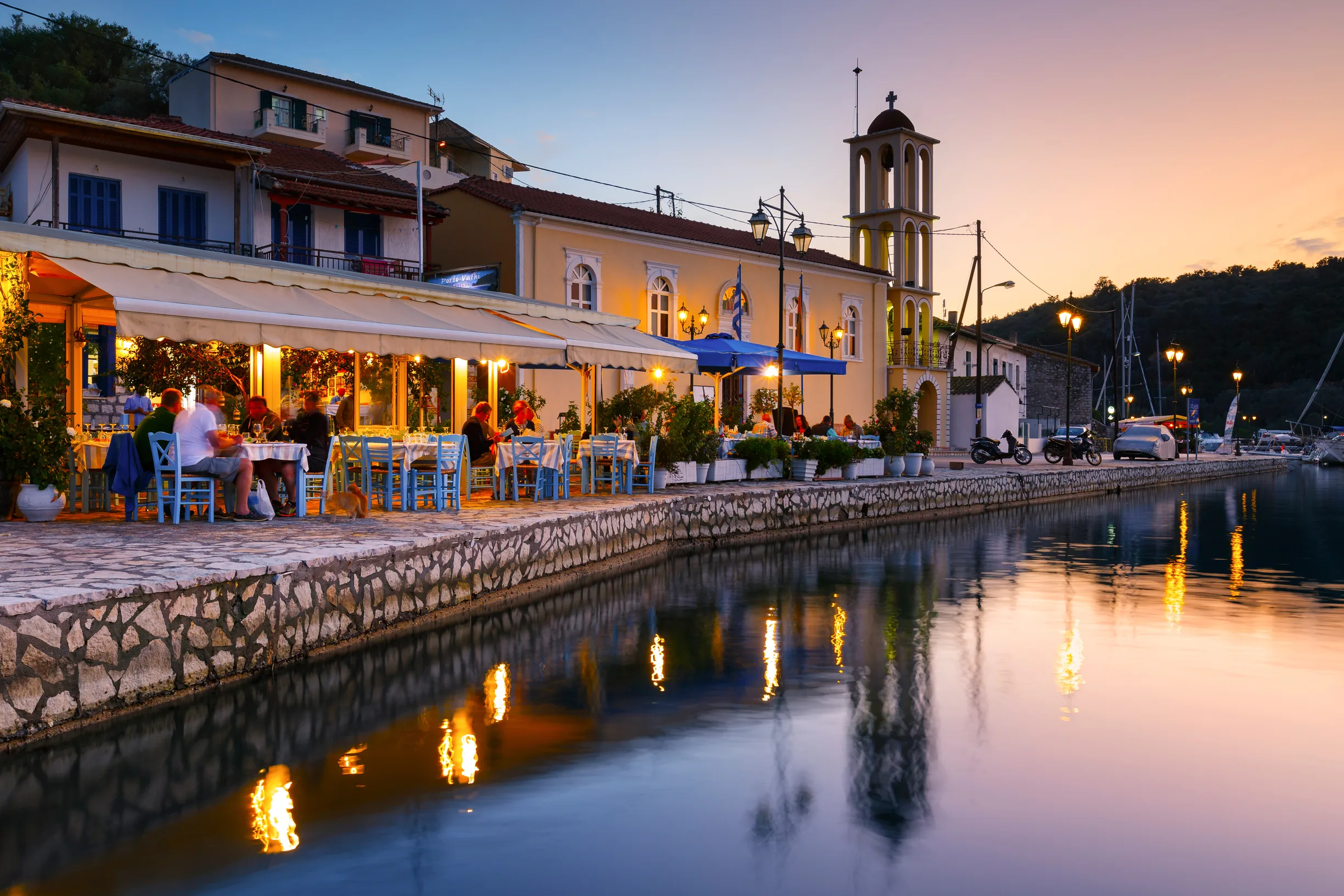
The panigiria, the village saint-day feasts that light up the greek island festivals august calendar, are the best reason to plan your route around a date rather than a wind angle. These are not tourist shows. They are the village’s own celebrations, with grilled meat, free-flowing local wine, live music and dancing that runs until the small hours, and arriving by boat puts you right at the heart of them. The biggest cluster falls around the 15th, but smaller feasts dot the whole month.
This is how to fold those feasts into a catamaran itinerary: where the all-night panigiria happen, which harbours to avoid for the crush, and the simple etiquette of joining a long village table where you are a welcome stranger.
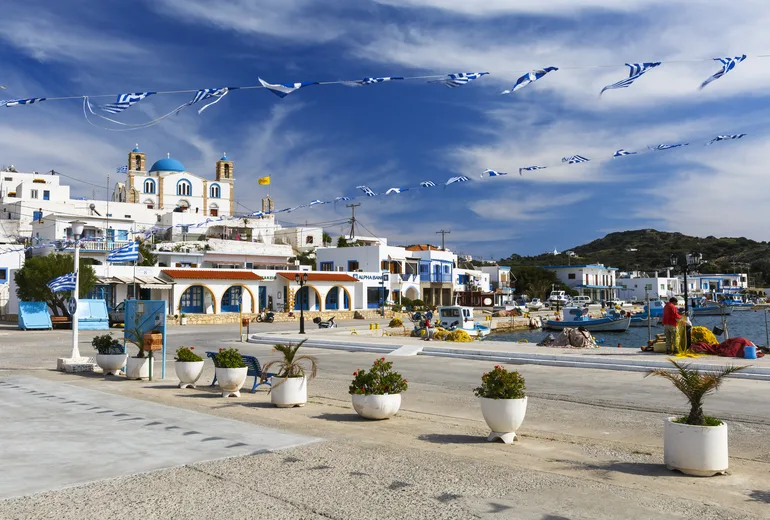
The 15th of August, Dekapentavgoustos, is the Dormition of the Virgin Mary and the single biggest day in the Greek summer. Villages across the islands hold a church service in the morning and a panigiri in the evening, and many Greeks travel home specifically for it. For a charter crew it is the highlight of an August week, provided you plan around the surge of people it brings.
The shape of the day is consistent. A liturgy at the village church, then through the evening the square fills with long communal tables, cauldrons of goat or lamb stew, barrels of the island’s own wine, and a band striking up traditional music that pulls everyone into circle dances. It is loud, generous and entirely unselfconscious, and joining in is expected rather than merely tolerated.
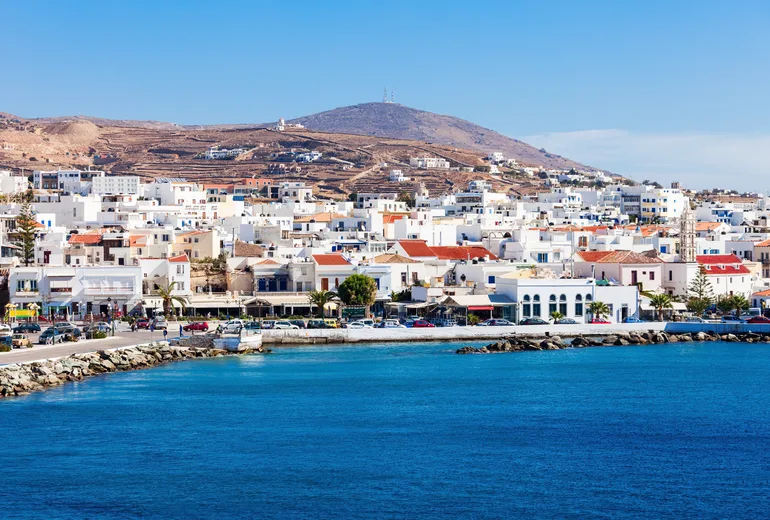
One island needs a clear caveat. Tinos, home to the miraculous icon of the Panagia Evangelistria, draws enormous Orthodox pilgrim crowds for the 15th, and its harbour and town are overwhelmed in the days around the feast. It is a profound experience to witness, but it is the opposite of a quiet anchorage, and berths are scarce to non-existent. If you want the spectacle, anchor off and go in by dinghy, and do not plan to overnight on the town quay.
The most authentic feasts are in the smaller villages, not the marquee ports. On Amorgos, the panigiri at Langada and the feast at the Hozoviotissa area are famous for running until dawn with raki and the island’s psimeni raki. Naxos throws several village panigiria, with Filoti among the largest, deep in the mountains but reachable by a short taxi from the port. Ikaria, slightly off the typical Cyclades track, is legendary for panigiria that genuinely go all night and fund the village for the year.
Closer to the standard routes, the small Cycladic villages above quiet harbours often hold a saint-day feast you would never find without asking. A cat’s shallow draft lets you anchor in a sheltered bay below a hill village, then walk or taxi up to a feast the cruise crowds never see. Pair a festival night with a daytime exploration of an island like Paros, where our guide to the beaches, villages and anchorages of Paros by catamaran maps out the harbours within reach of its inland villages.
The 15th is the peak, but it is far from the only date. Individual villages hold their own panigiri on the feast day of their patron saint, scattered right across August. Ask at the first taverna you stop at, and crews are often pointed toward a feast happening that very week two bays along. These smaller events are frequently the warmest, with fewer outsiders and a village happy to fold a visiting boat crew into the celebration.
A panigiri is communal by design, and a respectful visitor is genuinely welcome. There is no ticket and usually no fixed price; the food and wine are often free or run on a small contribution to the church committee that organises it. That is a different transaction from a normal taverna meal, and worth understanding alongside the unwritten rules of Greek taverna dock etiquette that govern the quayside the rest of the week. The right approach is to arrive with goodwill, accept what you are offered, and join in rather than spectate from the edge.
A few simple courtesies go a long way. Dress modestly if you attend the church part of the day, since these are religious feasts first. Drop something into the collection plate or the committee box, because that is what keeps the feast alive year after year. Accept the wine and the food when they are pressed on you, which they will be, and do not try to pay a private bill as you might in a taverna. And when the music starts, joining the back of the dance line, however clumsily, is the surest way to be embraced rather than watched.
Logistics deserve a thought, because the best feasts are often up in the hills, not on the quay. Anchor in a sheltered bay early, sort transport up to the village before evening, and plan a way back that does not involve a long dark walk down a goat track after midnight. Many crews arrange a taxi to wait or stay in the village and dinghy back to a boat anchored close in. Do not drink and then attempt a tricky pilotage in the dark; pick an easy, well-protected anchorage so the sail is the simple part of the night.
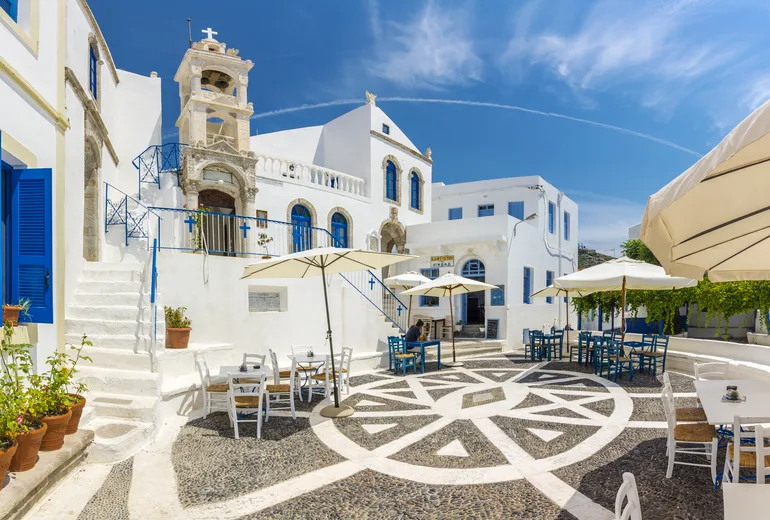
The smart move is to treat the festival calendar as one more layer of route planning, alongside the wind. Find out which villages near your cruising ground are holding a panigiri during your week, then shape the itinerary so you are anchored within reach on the right night. Around the 15th, accept that the popular harbours will be busy and either embrace the energy or deliberately pick a quieter island whose feast is just as real.
Provisioning still matters, because the day before a big feast the village shops can sell out and the morning after, half the island is sleeping it off. Stock the boat in a larger port beforehand, as our Greek catamaran provisioning guide sets out, so a closed shop never derails breakfast. Get the planning right and a panigiri becomes the memory that defines the trip: the long table, the band, the village that took your crew in as if you had always belonged.
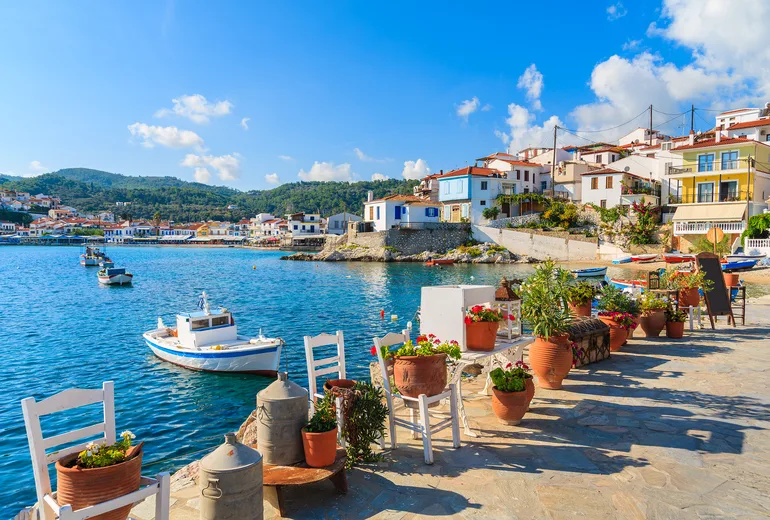
Almost any island holds a panigiri during August, with the biggest wave around the 15th for Dekapentavgoustos. Amorgos, Naxos villages like Filoti, and Ikaria are famous for all-night feasts, while countless smaller villages hold their own saint-day panigiri. A catamaran’s shallow draft lets you anchor below a hill village and reach feasts the crowds never see.
Dekapentavgoustos, the 15th of August, is the Dormition of the Virgin Mary and the biggest day of the Greek summer. Villages hold a morning church service and an evening panigiri with food, wine, music and dancing, and many Greeks travel home for it. For a charter crew it is the highlight of the month, as long as you plan around the crowds.
Only with eyes open. Tinos draws enormous pilgrim crowds for its miraculous icon, and the harbour and town are overwhelmed around the feast, with berths scarce to non-existent. The spectacle is remarkable, but anchor off and go in by dinghy rather than planning to overnight on the town quay.
Yes, and it is mostly common courtesy. The food and wine are often free or run on a small contribution, so drop something in the committee box rather than trying to pay a bill. Dress modestly for the church part, accept what you are offered, and join the dance line when the music starts; participation is welcomed, spectating from the edge less so.
Anchor early in a sheltered, easy bay, arrange transport up to the village before dark, and plan a safe way back that avoids a long midnight walk down a rough track. Many crews book a taxi to wait or dinghy back to a boat anchored close in, and nobody should attempt tricky pilotage after the wine has been flowing.
Want to weave the festival calendar into your route? Start with our Greek catamaran charter destinations and plan a week built around the long village table.