The Great Aegean One-Way: Athens to Rhodes by Catamaran in 10 Days (2027 Season)
Ride the meltemi downwind from Athens to Rhodes in 10 days, the one Greek passage where a one-way fee pays for itself.
Read more
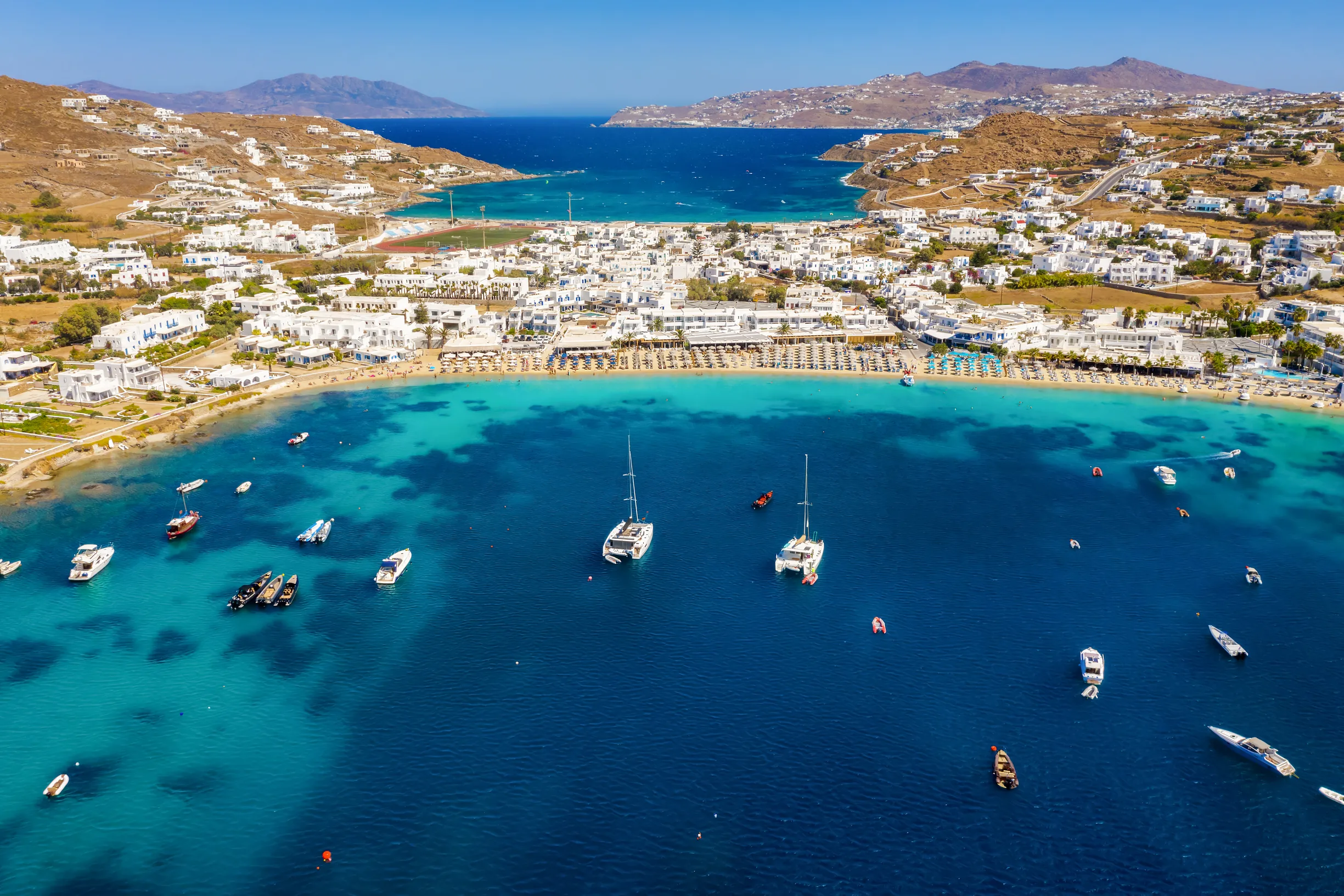
Is it too windy to sail the Cyclades in August? Honestly, sometimes, and pretending otherwise does nobody any favours. Plenty of people ask about cyclades august wind sailing hoping for a clean yes or no, but August is the peak of the meltemi, the dry northerly that can settle in for days and turn the open Aegean into a serious test. The answer is not a simple yes, and a 45 ft catamaran handles it better than most boats afloat.
Here are the real numbers, what a Force 5 to 7 actually feels like on a cat, the lee-side route shapes that keep working when the wind is up, and the honest moment to consider booking the Ionian, Sporades or Dodecanese instead.
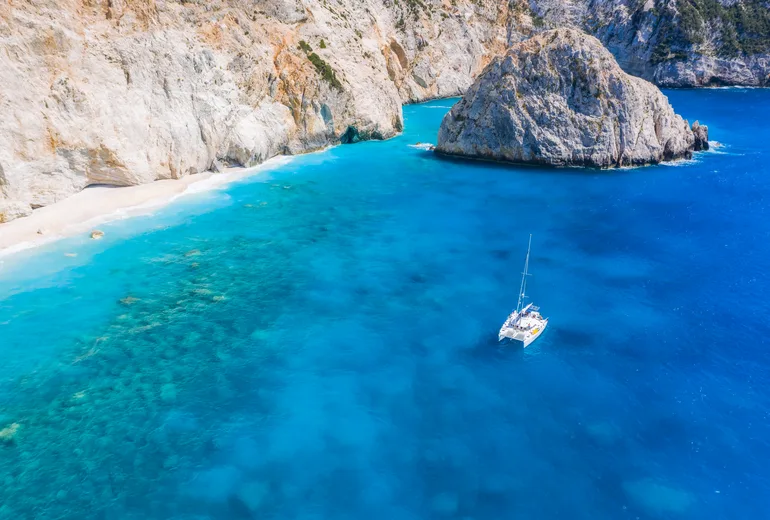
In a typical August the central Cyclades see the meltemi blowing on a majority of days, commonly Force 4 to 6, with multi-day spells touching Force 7 and gusts well beyond. A run of three or four days at 25 to 35 knots is normal rather than exceptional, and it can arrive with little notice. Between those spells you get gentler windows of Force 3 to 4 that are glorious sailing, so the month is a mix of strong and pleasant rather than relentlessly brutal.
What the averages hide is the local funnelling. The channels between Tinos, Mykonos and Naxos accelerate the flow, and the gaps off the southern capes add ten knots on top of the open-water figure. A forecast of 22 knots can mean a comfortable reach in one strait and a wet, pinned-down slog in the next, which is why reading the chart matters as much as the headline. Our guide to sailing weather in the Cyclades goes into the seasonal pattern in more detail.
A catamaran sails flat, so the heel that frightens new crews on a monohull simply does not happen. In a Force 5, a 45 ft cat under a reefed main and partial jib is fast, level and dry on a reach, and most guests find it exhilarating rather than alarming. The deck stays usable, drinks stay on the table, and below decks nobody is wedged into a bunk at an angle.
Push into a steady Force 6 to 7 and the picture changes. The cat is still stable, but the apparent wind builds quickly, the bridgedeck slaps in a steep beam sea, and the loads on sheets and winches climb fast. This is manageable for an experienced crew who reef early and pick their angles, and genuinely tiring for a relaxed family crew. The boat can take more than the people aboard usually want to, which is the key thing to remember.
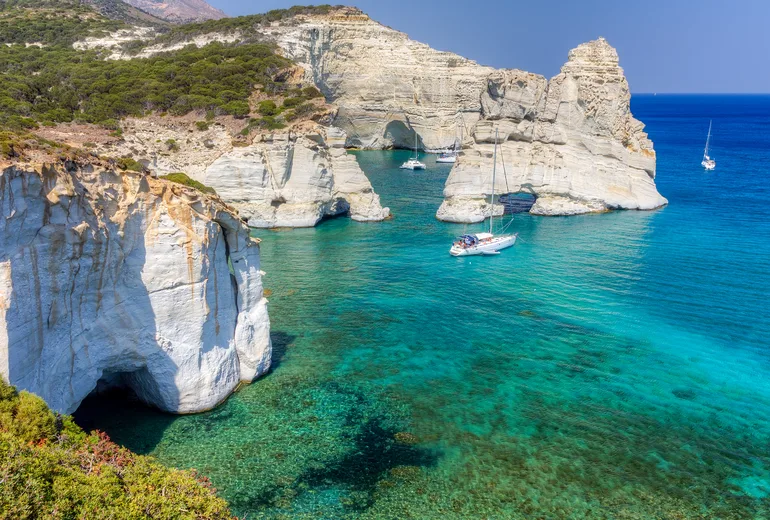
The meltemi blows from the north, so the trick in August is to plan routes that keep high land between you and the wind. Sail in the lee of the islands rather than across the open channels, hop south and east in the morning calm, and use the bigger islands as windbreaks. A route that strings together sheltered south-coast anchorages is far more pleasant than one that demands a long beat to windward every afternoon.
Think in terms of short legs and protected destinations. Paros and Naxos give good lee-side anchoring on their southern and western shores, and the channel between them can be sailed cannily by hugging the sheltered side. Our detailed look at Paros by catamaran, its beaches, villages and anchorages shows the kind of protected stops that make an August week work.
The meltemi typically eases overnight and builds through the morning, peaking in the afternoon. An early start is the single most effective tactic: leave at first light, make your passage in the gentler morning wind, and be anchored before the afternoon blow fills in. Crews who treat August like a lazy late-breakfast month end up fighting the worst of the wind every day, while early risers sail in the calm and swim through the windy afternoons in a sheltered bay.
Sometimes the honest advice is to not sail the open Cyclades in August at all, especially with young children, nervous guests or a crew new to sailing. Greece has three excellent alternatives that escape the worst of the meltemi.
The Ionian, on the west coast, is the antidote to the meltemi. Summer winds there are gentle, often a pleasant afternoon sea breeze of Force 3 to 4 that dies by evening, and the islands sit close together so legs are short. For a first family charter or a crew that wants swimming and tavernas over hard sailing, it is the obvious choice; our notes on sailing weather in the Ionian Sea explain why the conditions are so much softer.
The Sporades, off the central mainland, are green, sheltered and far calmer than the Aegean in high summer, with the Alonissos marine park as a quiet highlight. The Dodecanese, in the southeast, also feel the meltemi but offer more lee-side routing among closely spaced islands like Symi, Tilos and Halki. Both reward crews who want warm water and good anchorages without the relentless northerly of the central Cyclades. If you are weighing the regions, our piece on sailing weather in the Sporades is a good place to start.
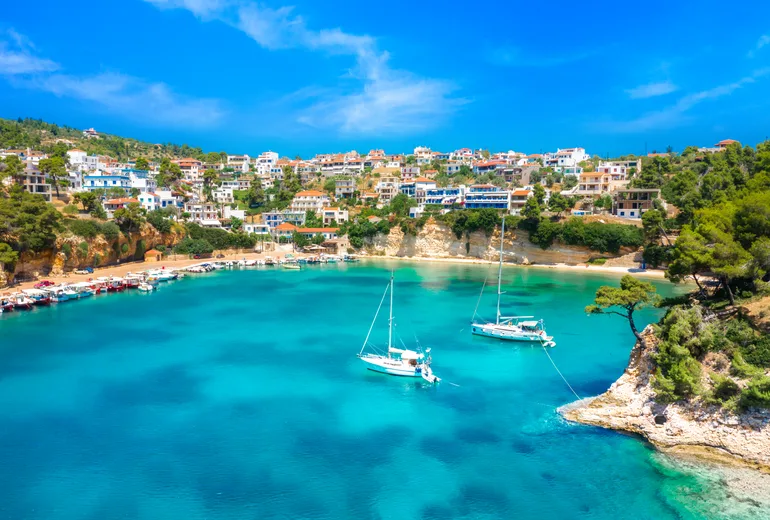
For an experienced crew on a well-found catamaran who plan around the wind, the August Cyclades are demanding but rewarding, and the strong-wind days simply become rest days at anchor. For a relaxed family crew, the honest answer is that the central Cyclades in August can be more wind than you signed up for, and the Ionian or Sporades will give you the holiday you actually wanted.
The boat is rarely the limiting factor. A catamaran handles the meltemi with composure that surprises people. The real question is what your crew wants from the week, and matching that to the right region is the decision that makes or breaks an August charter. Building that flexibility into your plan, as our guide to adapting a Greek itinerary to the weather describes, is the difference between a great trip and a tense one.
It can be. August is the peak of the meltemi, with the central Cyclades commonly seeing Force 4 to 6 and multi-day spells touching Force 7. For an experienced crew who plan around the wind it is demanding but rewarding, while a relaxed family crew may find it more than they want and be happier in the Ionian or Sporades.
A typical August brings the meltemi on a majority of days, usually Force 4 to 6, with runs of three or four days touching Force 7 and gusts well beyond. Local funnelling between the islands and off the capes can add ten knots to the open-water figure, so the wind on the water is often stronger than the headline forecast.
Yes, better than most boats. A catamaran sails flat with no alarming heel, stays dry and stable on a reef-down reach, and keeps the deck and cabins usable in conditions that would have a monohull well over. The boat can usually take more than the crew wants to, so the limit is the people aboard, not the cat.
The Ionian on the west coast is the calmest option, with gentle afternoon breezes and short hops between close islands, ideal for families. The Sporades are green and sheltered, and the Dodecanese offer more lee-side routing among closely spaced islands. All three escape the relentless northerly of the central Cyclades.
Start early. The meltemi eases overnight and builds through the morning, peaking in the afternoon, so a first-light departure lets you sail in the calm and anchor before the blow fills in. Combine that with lee-side routes that keep high land between you and the wind, and reef early to size the boat to the gusts.
Not sure which region suits your crew? Compare the options on our Greek catamaran charter destinations page and book the week that matches the weather you want.