Two Weeks, One Loop: The Complete Cyclades Catamaran Circuit for 2027
The complete two-week Cyclades catamaran loop from Athens, with layover days built in to absorb the meltemi.
Read more
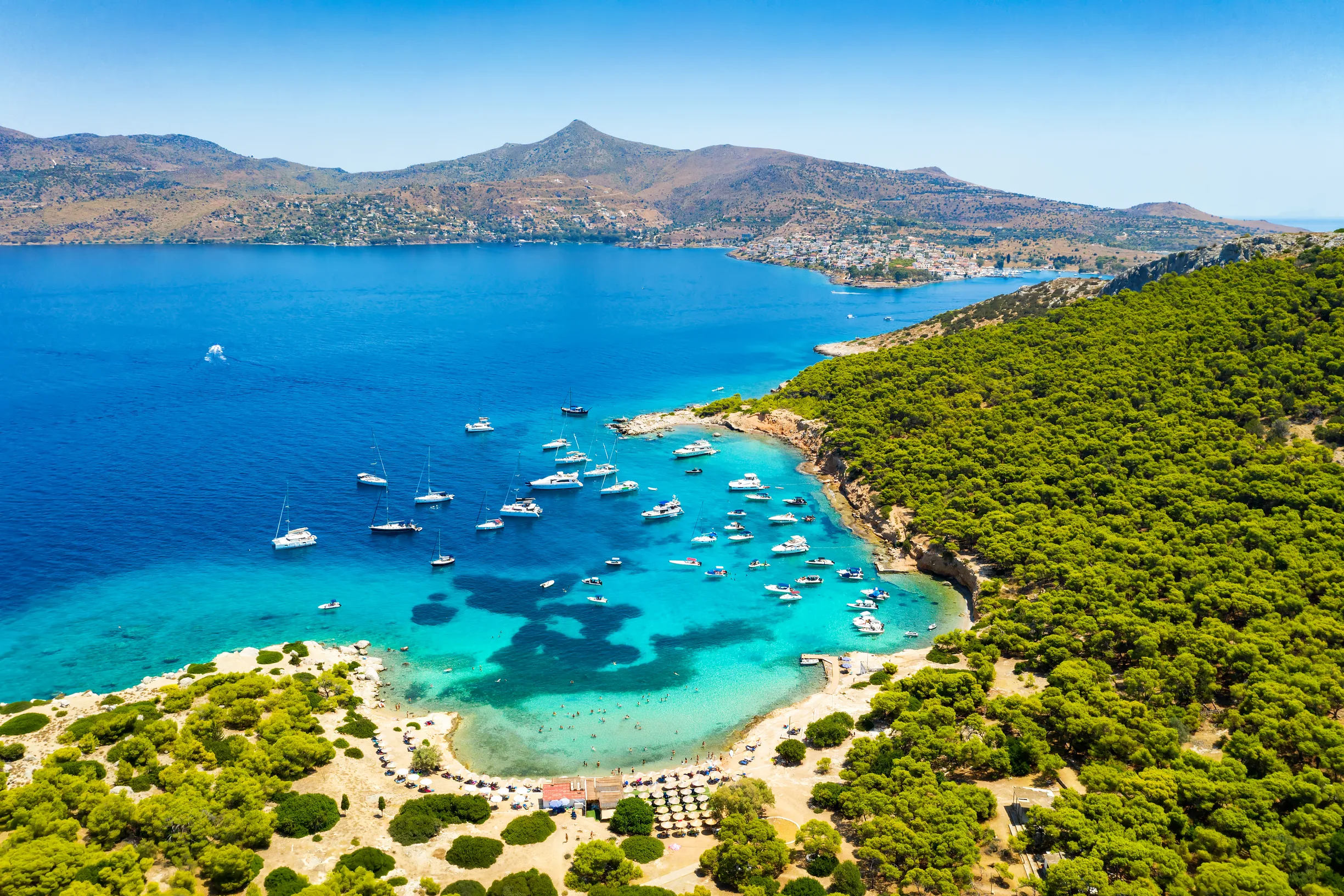
A cruising catamaran in Greece typically draws about 1.2 m, roughly half what a comparable monohull needs, and that single number unlocks a list of anchorages most keelboats can only watch from deeper water. These are the best catamaran anchorages greece can offer to a shoal-draft boat: sand shelves, lagoon shallows and pocket coves where you tuck inside the bank while the deeper fleet rolls outside.
The point is not just that a cat can reach them. It is that the shallow water is the prize. The colour over white sand at two metres, the calm inside a reef the swell never crosses, the spot ten metres closer to a beach taverna than anyone else can manage. Here are ten anchorages where the draft pays off, with the practical notes you need to use them well.
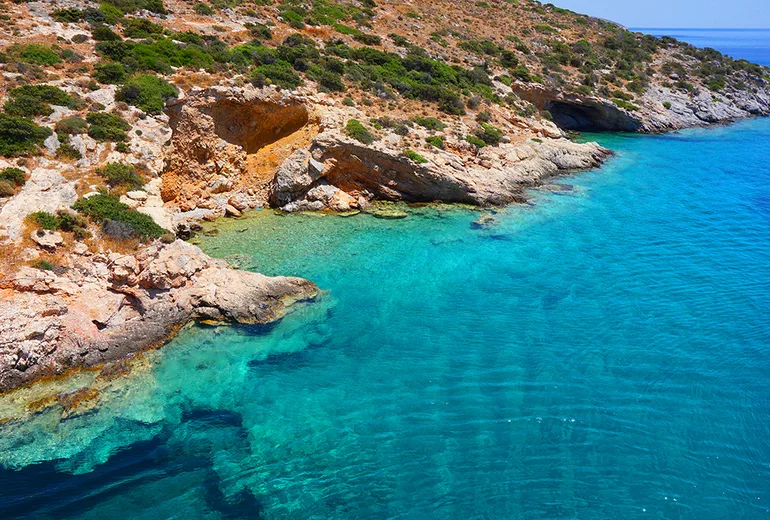
The cluster of little islands south of Naxos and Paros is shoal-draft country. Despotiko, the uninhabited islet off Antiparos, has a broad sandy bay between the two islands where a cat can lie in two to three metres over bright sand, well inside the line the deeper boats hold. There is an active archaeological dig ashore and almost nothing else, which is exactly the appeal. Hold off in fresh meltemi, as the bay opens to the north.
Schinoussa and Iraklia, a short hop on, give you sheltered coves like Tsigouri and Livadi with sand bottoms that shelve gently. A 1.2 m draft lets you anchor close in where the water is calmest and the snorkelling best. These are tiny communities, so provision before you arrive; our notes on the best charter water toys and watersports for Greece are worth a look, because clear shallow anchorages like these are where paddleboards and snorkel gear earn their keep.
The beauty of the cluster is how close it all is. Despotiko to Pori is a morning’s gentle sail, and the four little islands plus the bigger anchorages of Naxos and Paros make a self-contained week with barely a long passage in it. That short-hop character suits crews with children, who get a fresh swimming bay every afternoon without anyone enduring a four-hour beat, which is the same logic behind our guide to the best Greek anchorages for a family catamaran charter.
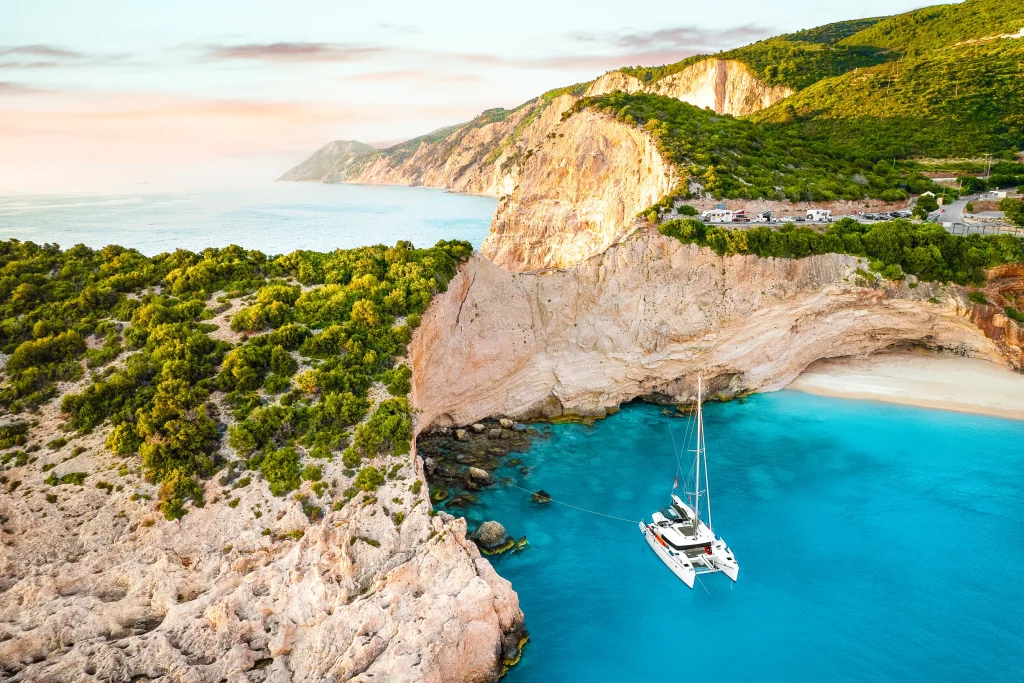
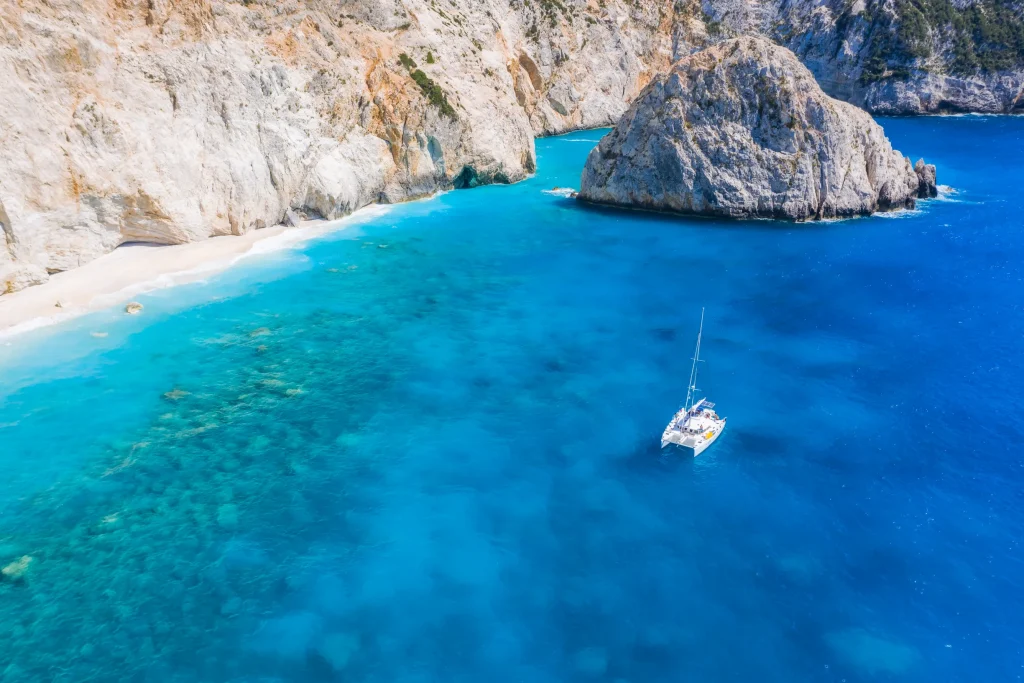
Pori, on the north of Pano Koufonisi, is the picture every charter brochure wants: a long sand-bottomed bay in graded turquoise where the holding is good and the colour is genuinely startling. Deep-draft boats anchor out in the throat of the bay; a cat noses well in and lies in waist-deep water you can wade ashore from. It catches the swell when the meltemi is up, so use it in settled weather and move to the south coast if the wind backs in.
Polyaigos, the largest uninhabited island in the Cyclades, sits between Milos and Kimolos and rewards a shoal-draft boat with anchorages most crews never reach. The bays on its north side have pale sand shelves and water the colour of a swimming pool, and because there is no village, no ferry and no road, you often have the whole place to yourselves. Tuck in over the shelf, set the hook hard in sand, and watch the deeper boats give it a miss because the good water is too shallow for them.
Combine it with the famous coves of nearby Milos, where the white volcanic rock of Kleftiko and the sand-floored bays around Polonia make a natural pairing. For more on the island itself, our piece on the things to do on Milos you might not expect covers the parts beyond the obvious.
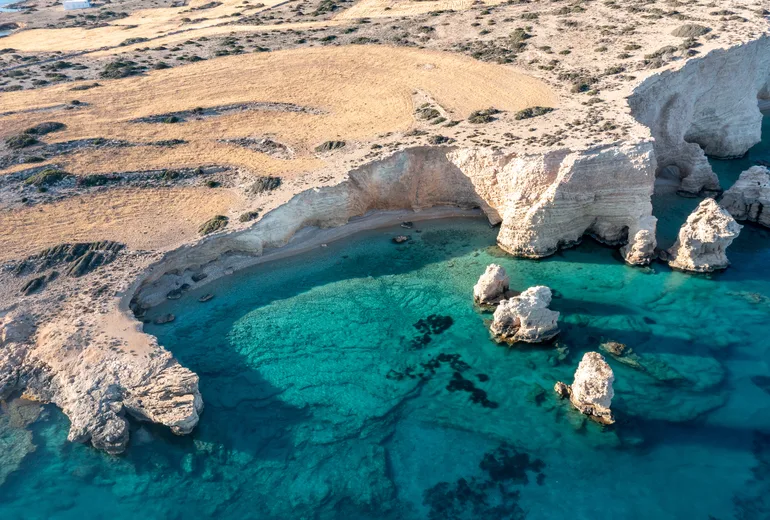
You do not have to sail to the deep Cyclades for shallow gold. The Saronic and Argolic gulfs, an easy reach from the Athens marinas, hide plenty of sand shelves. The bays around the Methana peninsula and the long shallow approaches near Koiladia let a cat lie close in over sand where monohulls anchor well off. These are gentler waters than the open Aegean, which makes them a sound choice early in the trip while the crew finds its feet. If you are planning the logistics, the Greek marina guide to Alimos, Lavrion and Mandraki is a useful starting point.
Down in the southern Peloponnese, Elafonisos and its Simos beach lagoon are the Greek answer to a Caribbean sandbar: a wide, shallow, white-sand basin where the water glows. It is exposed and not for every forecast, but on a calm day a cat can lie over the sand in barely two metres with the beach a swim away, in water far too shallow for most of the keelboat fleet.
East across the Aegean, the small Dodecanese islands offer their own shoal-draft anchorages. Lipsi has a string of sandy bays, Katsadia and Platis Gialos among them, where the bottom shelves slowly and a cat anchors close to shore in clear shallows. Nearby Leros, with its deeply indented coast, hides pocket coves off Lakki and Xirokampos that suit a boat able to creep in over sand and weed.
These eastern islands sit on a popular route up from Kos and Rhodes, and they reward crews who like quiet water and good tavernas over crowded marquee harbours. If you are starting that way, our catamaran itinerary from Rhodes through the Dodecanese threads several of them together.
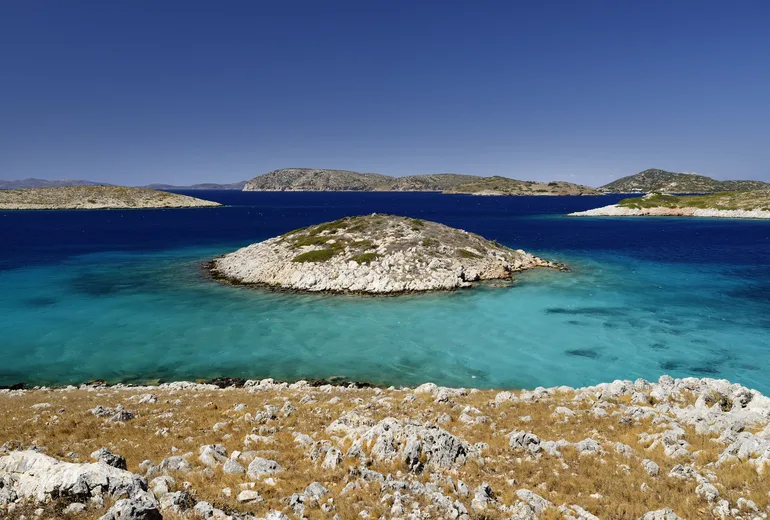
The Ionian, on the west coast, is gentler than the Aegean and hides its own shoal-draft prizes among calmer, greener water. The Sivota inlets on the mainland are a tangle of small islets and sandy-bottomed channels where a cat threads inside the line the deeper boats hold and lies in flat water surrounded by pine. The famous turquoise bays of Antipaxos, Vrika and Voutoumi, shelve from a white sand beach into water so clear the anchor chain throws a shadow on the bottom; a shoal-draft boat anchors right on the edge of the sand where the colour is brightest.
Further south, the channel between Lefkada, Meganisi and the smaller islets is short-hop heaven, with sand-floored coves like the ones around Meganisi’s Atherinos and the lagoon shallows behind the Lefkada causeway. Because the Ionian summer wind is a mild afternoon sea breeze rather than the meltemi, these shallow anchorages stay usable far more of the time, which makes the region a forgiving place to learn how a cat’s draft changes where you can go.
Shoal-draft freedom comes with responsibility. Read the water by eye: dark patches are weed or rock, pale patches are sand, and the brightest turquoise is the shallowest. Set the anchor in clear sand, not on seagrass, both for holding and to protect the protected Posidonia meadows that Greek authorities take seriously. Snorkel the anchor on arrival to confirm it is dug in, which takes two minutes and saves a midnight drag.
Watch the forecast more carefully here than anywhere, because many of these bays are open to the meltemi and a shallow anchorage that is idyllic in a calm becomes untenable in a Force 6. Have a deeper, more sheltered fallback in mind before you commit, and do not be the crew that hangs on too long in a building northerly just because the colour is lovely.
Beyond the draft, a catamaran lies flat at anchor and presents two hulls and a wide bridgedeck to a shallow bay, so the crew steps off the transom into thigh-deep water rather than scrambling down a heeled topside. That stable, low platform is what turns a sand shelf from a curiosity into the best berth in the bay, and it is a large part of why these anchorages reward a cat in particular.
There is a comfort dividend too. A monohull anchored in a shallow bay rolls to every wrap-around swell and tugs at its snubber through the night; a cat sits level and quiet, so the crew actually sleeps. Add the shoal draft and you can pick the most sheltered corner of a bay, right up under the lee of the land, where the swell never reaches and the deeper boats simply cannot follow. Over a week of nights at anchor, that combination of shallow access and steady motion is the difference between a tiring trip and a restful one, and it is why crews who try these sand-shelf anchorages on a cat rarely want to go back to a deep keel.
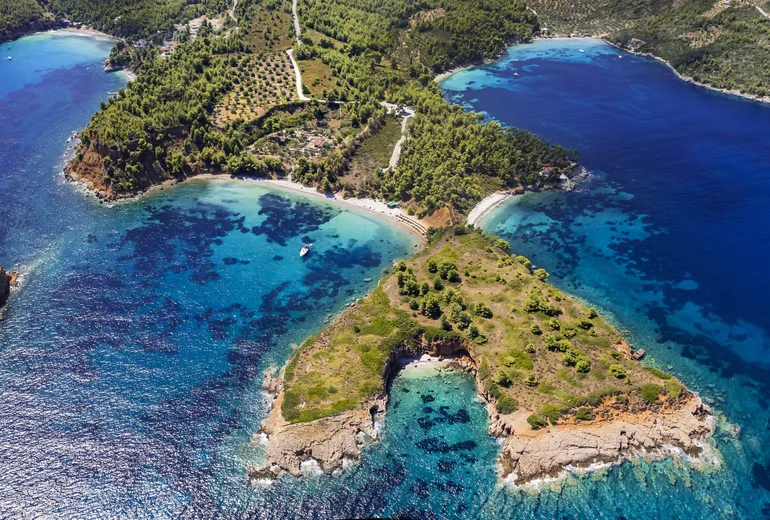
Any sand-shelf or lagoon anchorage with two to three metres over bright sand suits a 1.2 m catamaran far better than a deep-keel monohull. Despotiko, Pori on Koufonisia, the Polyaigos bays, Elafonisos and the Lipsi sand coves are prime examples where a cat lies well inside the line the deeper boats are forced to hold.
A typical cruising cat draws around 1.2 m, so it can lie comfortably in two metres over clean sand with room to spare. Read the water by colour, set the hook in sand rather than weed, and always confirm the depth at low water and check your swing before settling in for the night.
Many are open to the north and become uncomfortable or untenable in fresh meltemi, so they are best used in settled weather. Always have a deeper, more sheltered fallback in mind, watch the forecast closely, and move on rather than hanging on in a building Force 6 just for the view.
No special qualification, but good eyeball navigation helps. Learn to read the bottom by colour, drop the anchor in clear sand to protect the seagrass meadows, and snorkel the anchor to confirm it is dug in. A catamaran’s stable, level platform makes the whole process easier than on a heeling monohull.
The Small Cyclades around Koufonisia, Schinoussa and Despotiko are hard to beat for sand-bottomed turquoise water, with Polyaigos near Milos a wild standout. The Dodecanese shallows around Lipsi and Leros are quieter alternatives, and the Saronic and Argolic shelves offer gentler shoal-draft anchoring close to the Athens bases.
Want help shaping a shoal-draft route? Browse our Greek catamaran charter destinations and pick the islands where a shallow draft truly pays off.