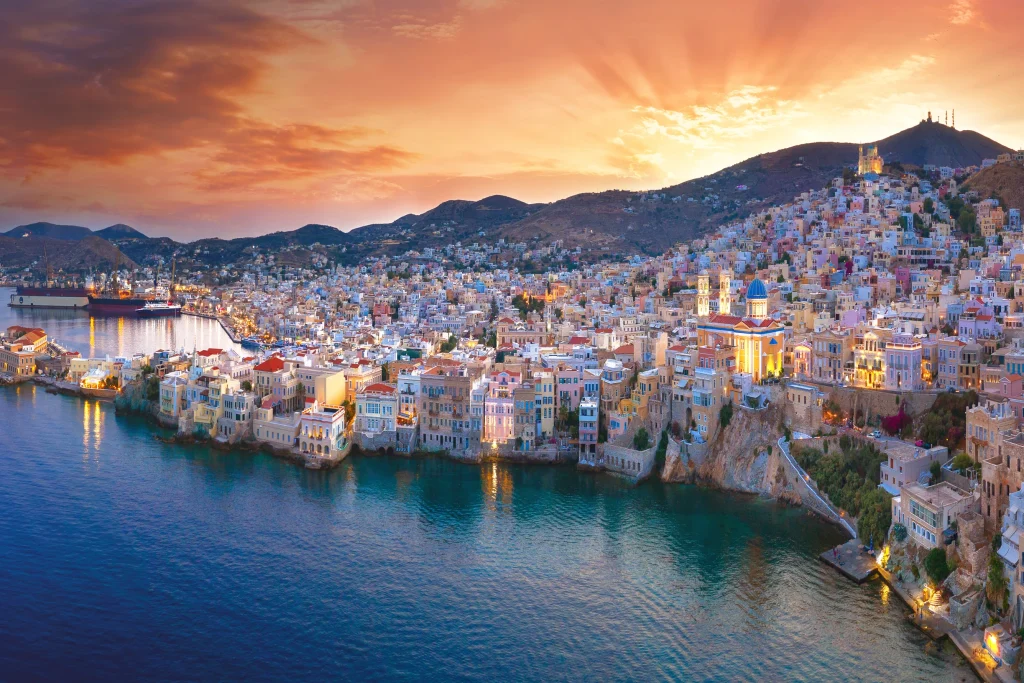
The September Window: A 7-Day Cyclades Catamaran Route for the Famous Islands, Minus August
A full 7-day September Cyclades catamaran route through Syros, Mykonos, Paros, Naxos and Serifos, timed for fading wind and emptier quays.
Ler mais
If you start your charter from Lavrion, the two best islands of the week are sitting right on your doorstep, and almost everyone sails straight past them. Kea and Kythnos are the first land you reach out of the Attica base, yet most crews treat them as a fuel stop on the dash toward Mykonos and the central Cyclades. Done properly, Kea Kythnos sailing is the slow, satisfying start the rest of the trip deserves, and skipping it is a mistake worth correcting before you ever leave the dock.
Kea Kythnos sailing rewards the people who slow down. These are working Greek islands with quiet harbours, a famous double-sided sandbar, natural hot springs that bubble into the sea, and tavernas where the bill still surprises you in a good way. Spend your first two nights here and you arrive in the rest of the Cyclades rested instead of frazzled.
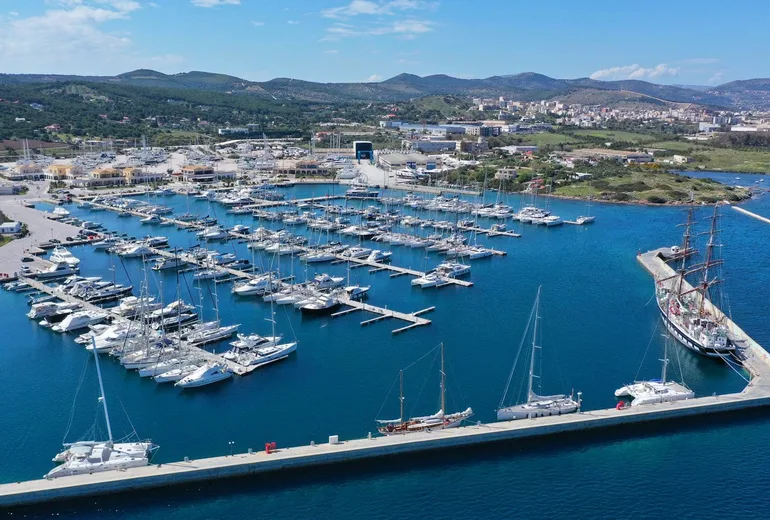
The pull of the brand-name islands is strong. Charters out of Lavrion marina often plan a punchy first day straight to Kythnos or even Syros, banking miles early so the rest of the week feels relaxed. The problem is the September meltemi. When the northerly is up, that opening run can be a slog into wind and short, steep Aegean chop, and you spend day one wet and tired rather than easing into the trip.
Kea sits roughly 20 nautical miles southeast of Lavrion, around three to four hours under sail depending on the breeze. Kythnos is another 12 to 15 miles beyond. Treat each as a short hop and your first two days become a gentle warm-up: shake down the boat, learn the anchor windlass, get the crew into the rhythm of life aboard before the bigger passages. By the time you point the bows at Serifos or Syros, everyone knows where the fenders live.
There is a practical argument too. Both islands draw far fewer charter boats than the headline Cyclades, so berths and quiet bays are easier to find in high season. On a busy August or early-September week, that alone can save you an hour of circling at sunset.
Lavrion itself is the under-rated start. It sits about 60 kilometres southeast of Athens airport, roughly a 45-minute taxi, which is often quicker than reaching the bigger Alimos marina across the city traffic. The base puts you closer to the Cyclades from the off, and Kea is the natural first target the moment you slip the lines. Plan your departure for early afternoon once the boat briefing and provisioning are done, and you’ll be anchored and swimming before the sun drops.
Kea, called Tzia by locals, has a yacht harbour at Vourkari on the island’s northwest coast. It is small, friendly and unmistakably a sailors’ anchorage rather than a resort. Med-moor stern-to along the quay or drop the hook in the bay and dinghy in. The waterfront fills up by early evening, and the mix of charter crews and Athenian weekenders gives Vourkari a low-key buzz without the cruise-ship crush you get further south.
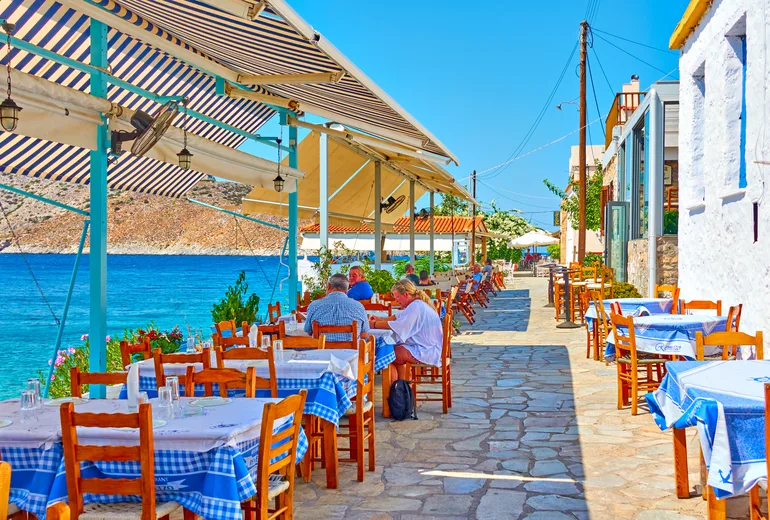
This is a food stop. The tavernas along the Vourkari front do excellent grilled fish and the island’s loukoumades, and a few doors down you’ll find places serving the local pork sausages and Kea’s own cheeses. Look out for paspalas, a Kea speciality of cured pork cooked with eggs and tomato, and the island’s thyme honey, which turns up drizzled over fresh cheese. Expect to pay roughly €18–30 a head for a relaxed dinner with wine, less if you stick to mezze and a carafe of the house white. Stock the boat at the small supermarket in nearby Korissia before you leave; provisioning gets thinner once you’re deeper into the chain.
If Vourkari is full or the wind swings to the northwest, the broad bay of Otzias just around the headland makes a calm fair-weather alternative, with a sandy bottom and easy holding. It’s a short walk or dinghy ride back to the Vourkari tavernas, so you don’t lose the evening ashore.
Kea’s standout shore excursion is the hike down to Karthaia, the ruins of an ancient city-state on the island’s wild southeast tip. You can’t drive there. The classic approach is to anchor in Poles Bay (Ormos Poleon) on the south coast, then walk the old stone path down to the temple of Athena and the small theatre, with the sea opening out below you. It’s a couple of hours round trip on rough ground, so wear proper shoes and carry water, but you’ll likely have the site close to yourself. Anchoring in Poles is fine in settled weather; if the swell wraps in, fall back to Vourkari for the night.
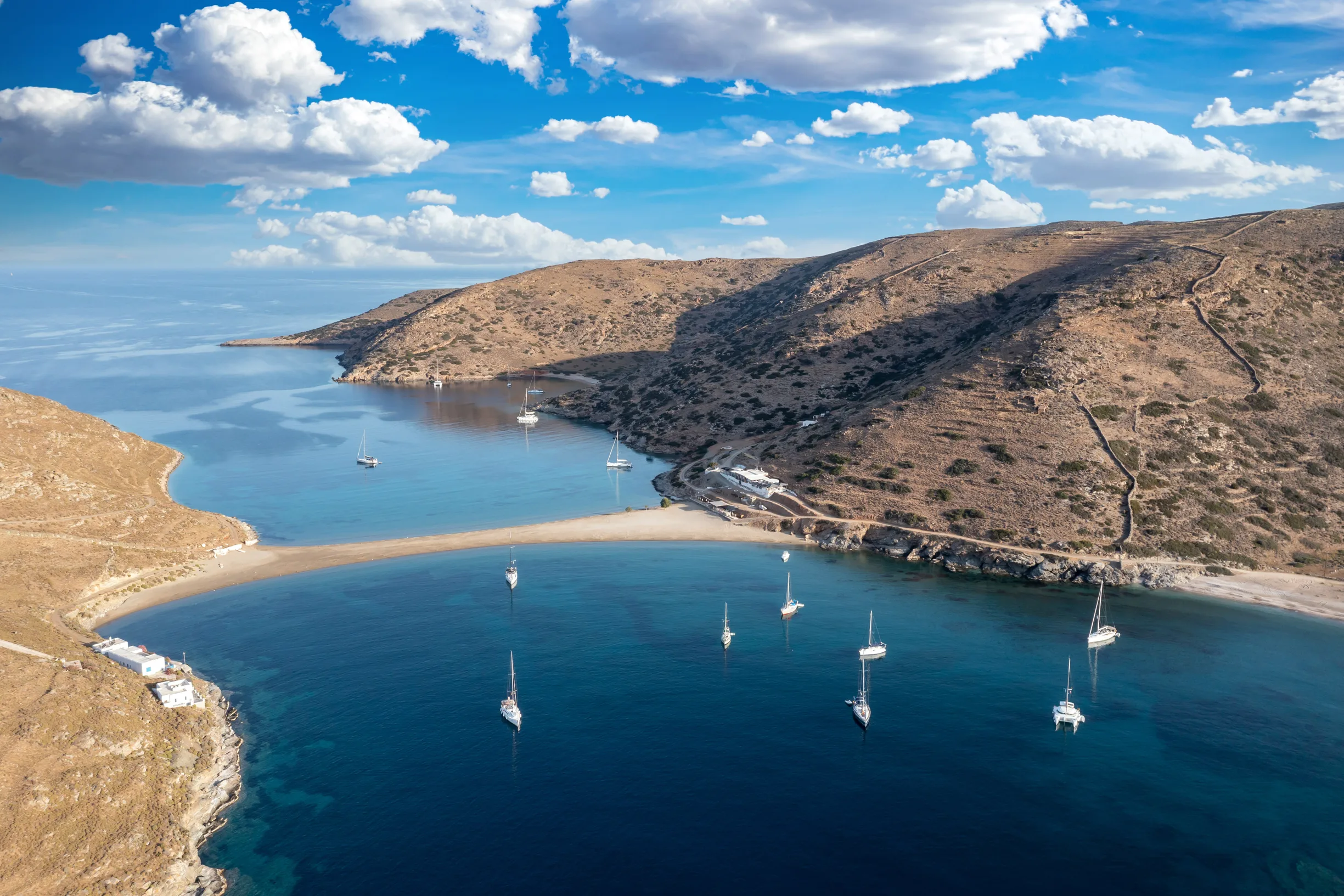
Kythnos is the reason to come this way, and the reason is Kolona. On the island’s northwest coast, a thin tongue of white sand connects Kythnos to the islet of Agios Loukas, with calm water on both sides. It is, frankly, made for a catamaran. A monohull anchors off and the crew swims in; a cat noses into the shallows over its own draft and parks you a short wade from the sandbar.
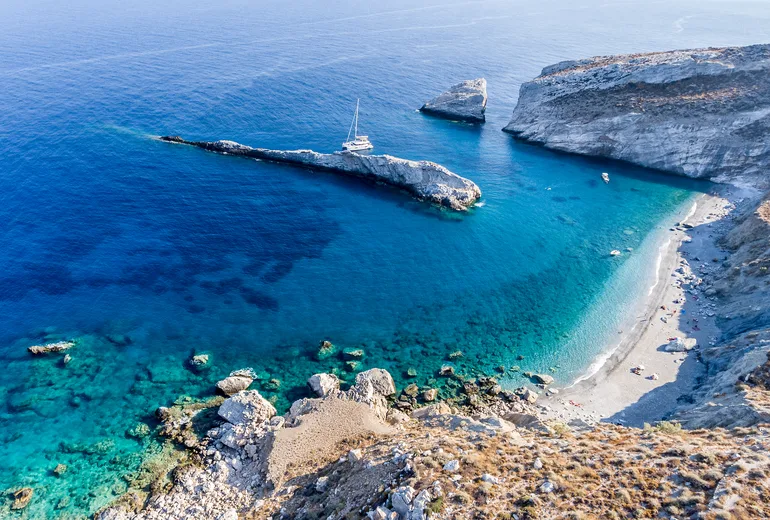
Plan to arrive at Kolona by early afternoon. It’s popular for good reason, and the best spots near the spit go first. Anchor on the side sheltered from the day’s wind, set plenty of scope in sand, and check your swing room. In a strong meltemi the gusts funnel through and the holding can get tested, so this is a fair-weather overnight rather than a storm hole. Many crews swim, eat aboard, then move to nearby Apokrousi or Episkopi bay if the forecast turns north overnight.
A few miles up the east coast, the village of Loutra is named for its thermal springs. Hot mineral water runs down into the sea where it meets the cold, and you can sit in the warm shallows by the shore. There’s a small harbour at Loutra where you can berth stern-to, with tavernas right behind the quay. It makes a tidy second night on Kythnos: springs in the late afternoon, dinner ashore, an easy morning departure toward Serifos or back across to Syros.
Here’s how the opening of a Lavrion charter actually flows when you build in these islands. Pick up the boat, brief the crew, and aim to clear Lavrion by mid-afternoon on day one. Sail the short leg to Vourkari on Kea, moor up, and have your first dinner ashore. Day two, walk to Karthaia from Poles if the weather’s kind, or just enjoy a slow morning swim, then cross to Kolona on Kythnos for the afternoon and overnight. Day three you’re fresh, the boat is sorted, and the whole of the central Cyclades is open ahead of you. From here you can follow our classic 7-day Cyclades sailing itinerary or build your own route.
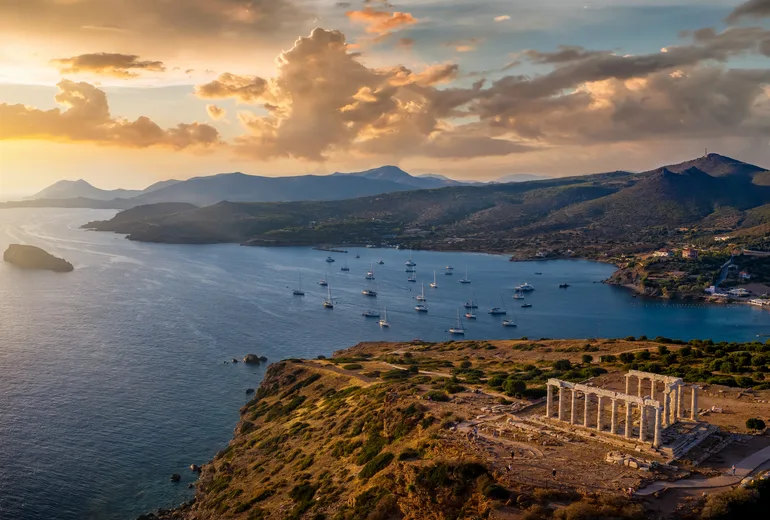
If you’d rather understand how the wind shapes all of this before you commit to a route, our overview of sailing weather conditions across the Cyclades islands lays out what the meltemi does month by month. And for the bigger central-island loop these two islands feed into, the 7-day September Cyclades catamaran route picks up roughly where Kythnos leaves off.
September is arguably the sweet spot for this corner of the Aegean. The meltemi softens through the month, the sea is still warm from summer, and the crowds thin noticeably after the first week. Mornings are often glassy, with the breeze filling in from the north by midday and easing again toward dusk, so plan your passages for the steadier middle hours.
Both islands are predominantly sand and weed over rock in patches, so look for the lighter sand patches when you drop and back down hard to make sure the anchor bites rather than skating across weed. Carry a tripping line if you’re nervous about snagging. Neither island has a large fuel berth, so top up water and diesel at Lavrion before you go and again when you reach a bigger marina later in the week; our guide to the main Greek charter marinas including Alimos and Lavrion covers what each base offers. Cash is handy: smaller tavernas on Kea and Kythnos don’t always take cards.
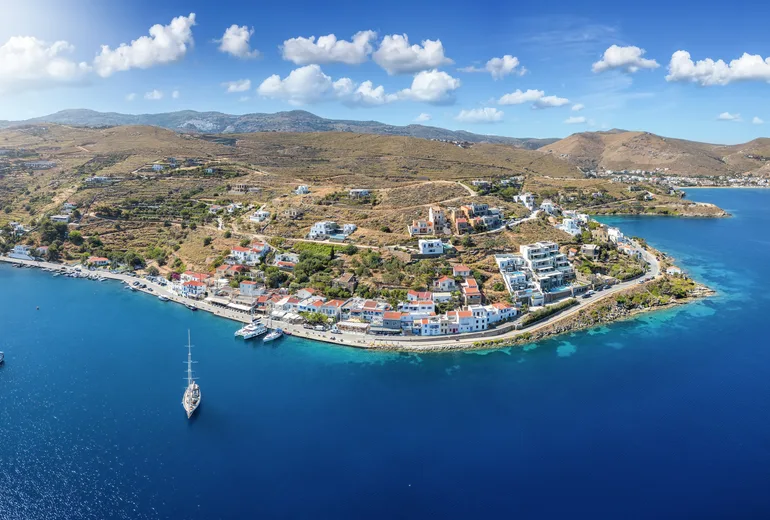
Yes, especially as your first one or two nights out of Lavrion. They’re close, quiet, and let the crew settle in before longer passages. Kythnos in particular has the Kolona sandbar, which suits a catamaran perfectly, plus the natural hot springs at Loutra. Skipping them to rush south often means a hard, windy first day for little gain.
Kea’s Vourkari harbour is roughly 20 nautical miles southeast of Lavrion, which is about three to four hours of sailing in typical conditions. Kythnos lies another 12 to 15 miles on, so the two islands make for short, manageable hops at the start of a week rather than long passages.
You can, and a catamaran is ideal there thanks to its shallow draft. Aim to arrive by early afternoon, anchor in sand on the side sheltered from the wind, and set generous scope. It’s a fair-weather overnight; in a strong meltemi the gusts funnel across the spit, so have a backup bay like Apokrousi or Loutra in mind.
Loutra is a village on the northeast coast of Kythnos with a small stern-to harbour. Thermal mineral water runs down to the shore and warms the shallows where it meets the sea. You can berth at the quay, soak by the beach in the late afternoon, and walk to tavernas right behind the harbour.
It helps. Bigger waterfront restaurants usually take cards, but smaller tavernas, kiosks and a few of the moorings prefer cash. There are ATMs in Korissia on Kea and in Kythnos Chora, but they can run dry in high season, so draw out euros before you sail.
Ready to build a week that starts slow and ends in the heart of the Aegean? Browse our catamaran charter destinations across Greece and put Kea and Kythnos at the top of the itinerary.